Series · How we solve it
Why we start by listening
AI assistants read what was written down. Most of how a regulated business really runs never was. So before any work starts, our agents interview your people.
Inovagio team · Published · Updated · 4 min read
On this page
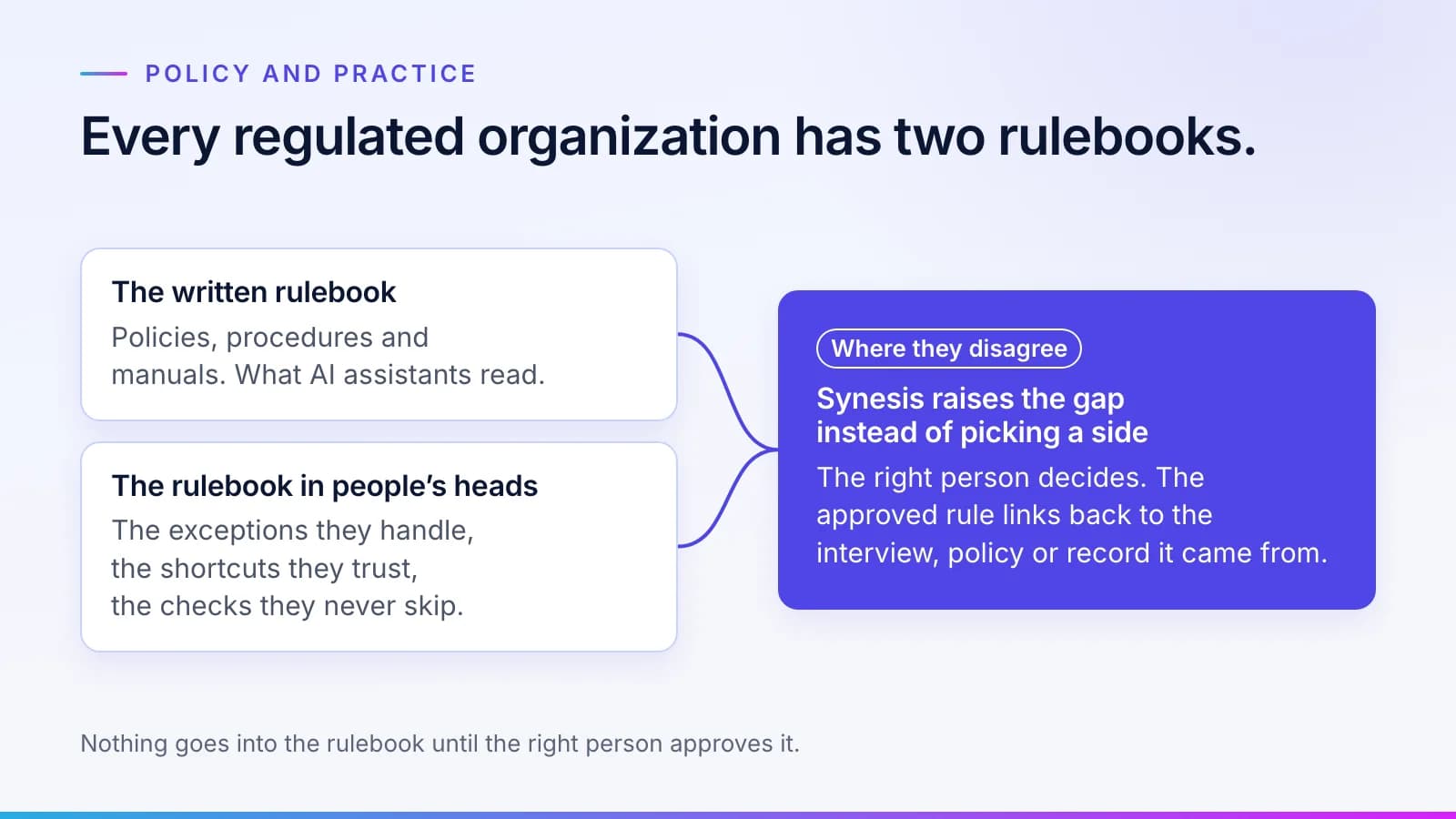
Every regulated organization has two rulebooks. One is written down in policies and procedure manuals. The other is tacit knowledge, and it lives in the heads of the people who do the work every day: the exceptions they handle, the shortcuts they trust, the checks they never skip.
AI assistants only see the first one. Tacit knowledge capture is the work of writing the second rulebook down, so an AI can follow it and the right person can approve it. Without it, AI can sound confident and still get the work wrong.
Where policy and practice part
#Ask an experienced accounts payable lead or a paralegal how a case really moves, and you will hear things like "we always call the vendor back on a number we already have before we change their bank details" or "anything from that court goes to a partner, whatever the policy says". None of it is in the manual, yet all of it decides whether the work is done correctly.
The work runs on both: what the documents say and what experienced people do. Where they disagree is where most of the value, and most of the risk, sits.
You can see the pattern in two example stories: a law firm whose analysts also check the other side's parent companies (Calloway Finch), and a city whose examiners skip the site plan for like-for-like replacements (City of Larkhaven). Both are example companies, not customers.
How we capture tacit knowledge
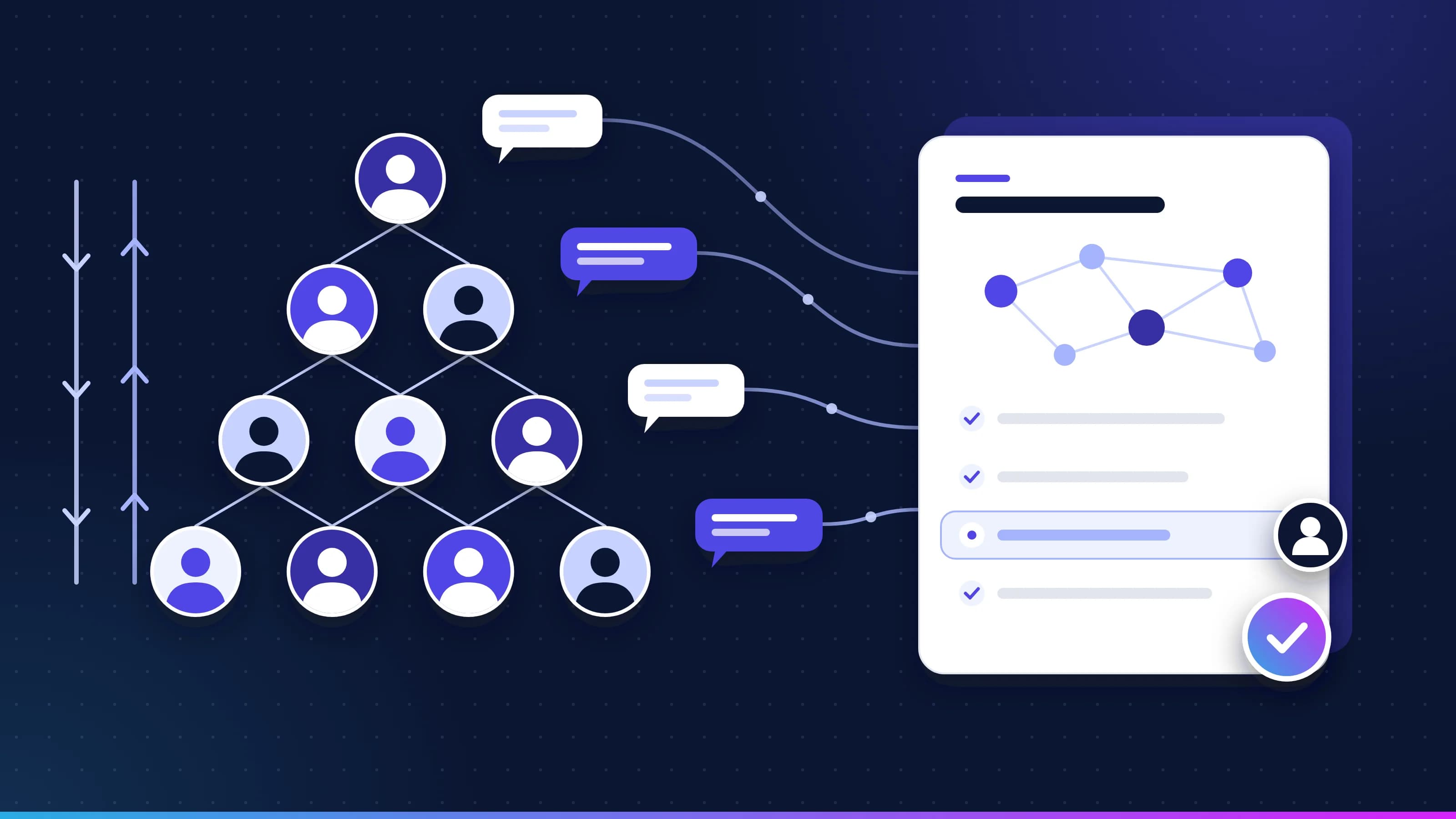
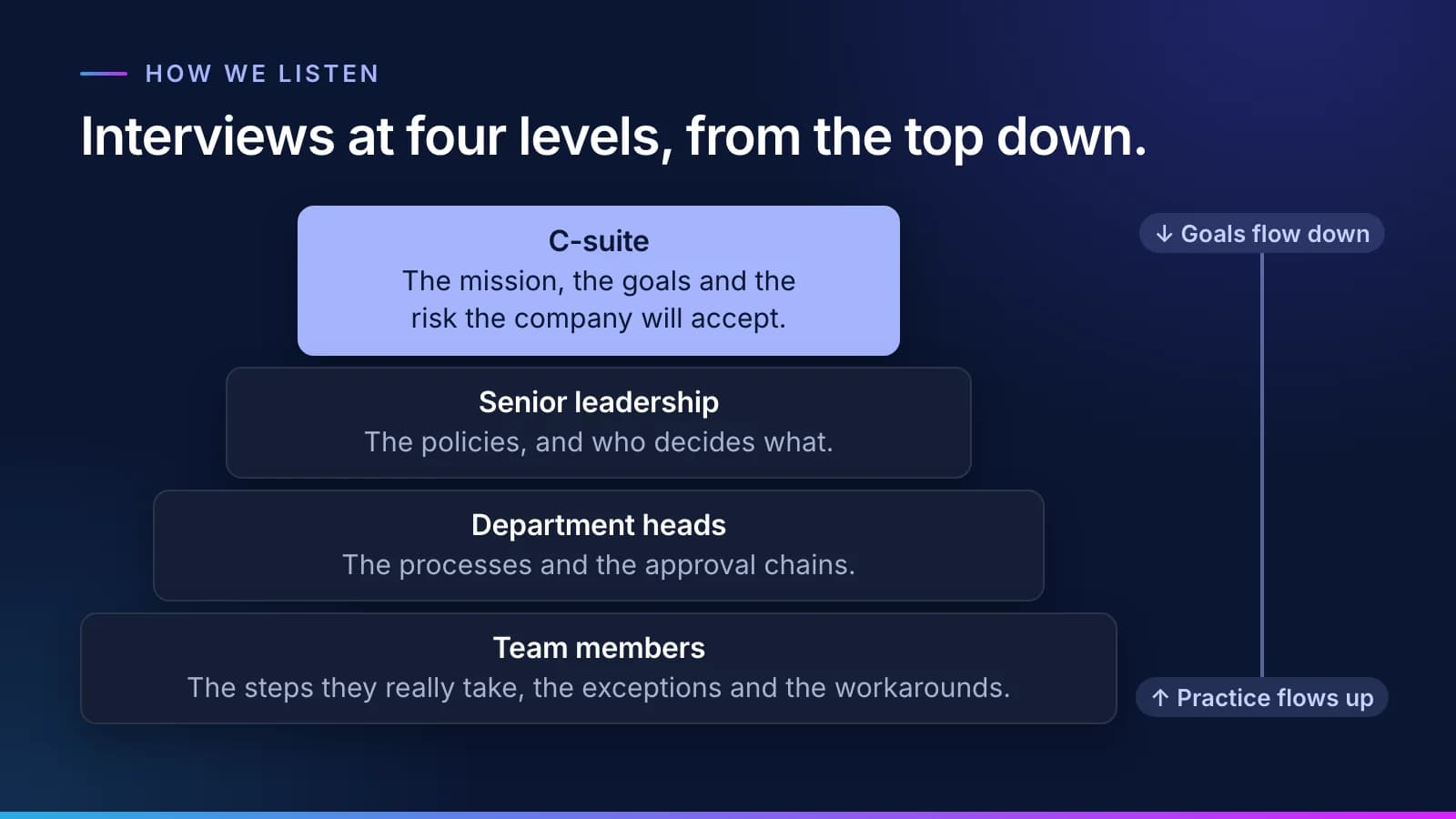
#Before any work starts, our agents interview your people at four levels, from the top down: the C-suite on the goals and the risk the company will accept; senior leadership on the policies and who decides what; department heads on the processes and approval chains; and team members on the steps they really take, including the exceptions and workarounds. Goals flow down, so every rule links to the goal it serves; practice flows up. Our agents read your policies and records alongside.
Then Synesis writes it all down as a rulebook, with every rule linked to where it came from: an interview, a policy, a record. Where what people do differs from what the policy says, it raises the gap instead of picking a side.
Each interview produces candidate terms and decision rules, including the exceptions people named, each linked to the interview it came from and waiting for its approver. The words people use go through the same approval, in five stages from an agreed vocabulary up to a knowledge graph.
You decide who approves each kind: a department head might approve their own team's terms and categories, and a governance body or compliance the rules that cross departments. Taxonomy, ontology, knowledge graph explains what each stage fixes.
Important
Nothing goes into the rulebook until the right person approves it. How a rule is approved shows each step.
Why this order matters
#Starting with the work and fixing the rules later is how AI projects stall in regulated industries. Starting with the rules means:
- your Virtual Employees follow your rules, not a general idea of how work is done;
- every result can be traced to an approved rule and its source;
- the rulebook is yours, written in plain language, and you can take it anywhere.
The approved rulebook becomes part of your context layer: what every agent reads before it acts.
Then the workflow is built and tested on your past cases, and once your experts and sponsor sign off, it runs in shadow mode: the AI drafts while people decide, measured on your own cases. It goes live only where shadow mode shows it works.
See it on one of your workflows
#The quickest way to see this is on your own work. A briefing walks one of your workflows through the method, with the people who build the platform.
Questions
What people ask.
What are unwritten rules?
They are the exceptions experienced people handle, the shortcuts they trust and the checks they never skip, none of it written down. They often decide whether the work is done correctly.
Why does AI that reads documents get regulated work wrong?
It only sees the written rulebook. Where practice differs from policy, it follows the document and misses the exception your people apply every day.
Who approves the rules the AI follows?
The right person in your organization, whether that's a department head, a governance body or compliance. You decide who approves which kind of rule, and a rule can require more than one approver. The AI drafts each rule, and nothing goes into the rulebook until your people approve it.
What happens when what people do differs from the policy?
Synesis raises the gap instead of picking a side, and the person your organization makes responsible for that area decides. The decision becomes a versioned rule, linked to the interviews and documents behind it.
Who owns the rulebook?
You do. It is written in plain language, every rule links to its source, and you can take it anywhere.
The products, industries and examples it covers.
- Knowledge layerSynesisTurns your policies, procedures, records and your people’s know-how into a rulebook your experts approve, which you own and can take anywhere.
- Role workersVirtual EmployeesVirtual Employees that plan, act and ask before anything leaves the building. Every plan is checked before it runs.
- IndustryLegalEach party on a new matter searched with its parent companies and former names, ethical wall requests drafted for lateral hires, and contracts compared with your playbook. Lawyers decide.
- IndustryGovernmentPermit applications checked against your code and checklist before the review deadline, and records requests prepared with proposed redactions for staff to approve.
- Worked example · Example companyCalloway FinchOne example law firm: how Inovagio’s Virtual Employees learn the conflicts rules from its policies, records and people, with a record of every check.
- Worked example · Example companyCity of LarkhavenOne example city: how Inovagio’s Virtual Employees learn the permit rules from its policies, records and people, with every decision on record.
- OverviewHow it worksTen checked steps from your first decision to the day it handles real cases.
Read next.
 Article · Context engineeringWhat is a context layer, and why do AI agents need one?A context layer tells an AI agent what your words mean, which rules apply, which records it may open and what was decided before. Gartner now calls it a core part of data infrastructure, and Forrester the next step after semantic layers and knowledge graphs. Here is what goes in one, in plain words. · updated November 18, 2026 · 11 min read
 Article · KnowledgeWhy the knowledge build stallsWriting down how a team really works is where most AI implementation time goes, and almost none of it is spent writing. Four stalls account for most of the delay, and the method is built around each one. · updated November 18, 2026 · 7 min read
 Article · ApproachAI only improves when it finds out fast whether it was rightA chess program that learned from every game it played, and therapists who did not get better with years of experience. What the two say about AI at work, and why every Inovagio task is checked. · updated November 20, 2026 · 4 min read
See it on your work
See how one of your tasks runs, start to finish.
A 30-minute walkthrough of one of your workflows, the approval step and the audit record, with the people who build the platform.