Financial services · Banks, credit unions, lenders and insurers
Virtual Employees for banks and credit unions, every file ready for the examiner.
Inovagio is AI for banks and credit unions: files checked against your policy, every exception sent to a named person, and every step recorded for the examiner.
We’ll spend 30 minutes with you on one of your workflows, and you don’t need to share any data.
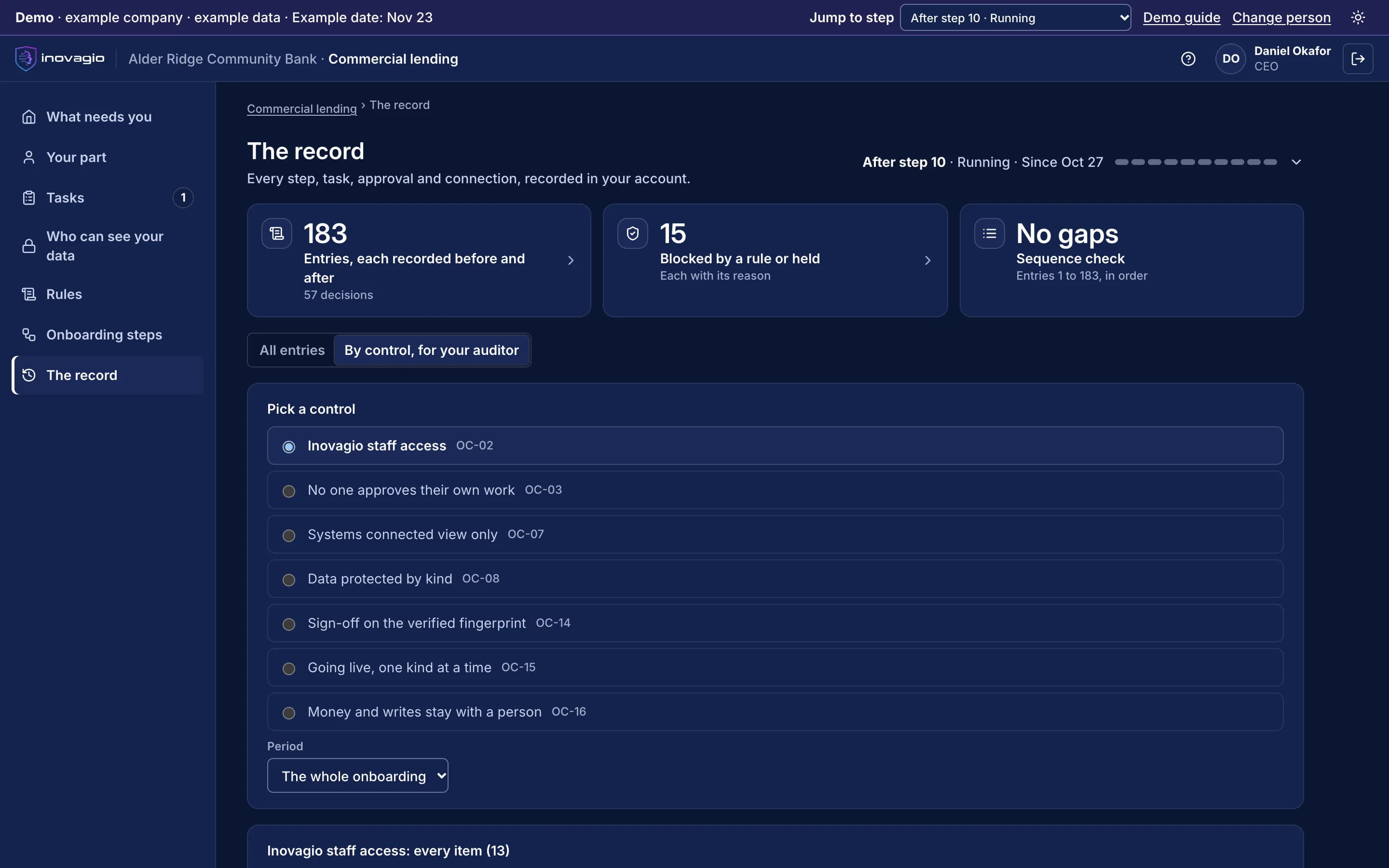
Pictured: Alder Ridge Community Bank’s record in the Inovagio App, sorted by control, with every item behind each control ready for an examiner (example company).
Examiners now ask how the AI was controlled.
The CSBS supervisory framework for AI asks state examiners to check permissions, human checkpoints, logging, reversibility and the ability to shut automated work down. Each one is a step below, on the record.
From your first decision to live work: the ten steps at Alder Ridge Community Bank.
Alder Ridge Community Bank is an example company, not a customer. Its sponsor signs a charter for commercial renewals and exam requests. Nothing touches live cases until the work has been tested, signed off, checked and run beside the team, and each kind of case goes live only when it clears the bar.
1 of 5 · Prepare · Steps 0–2
An account, a charter and sign-in, before anything connects
0
Step 0: Open your account
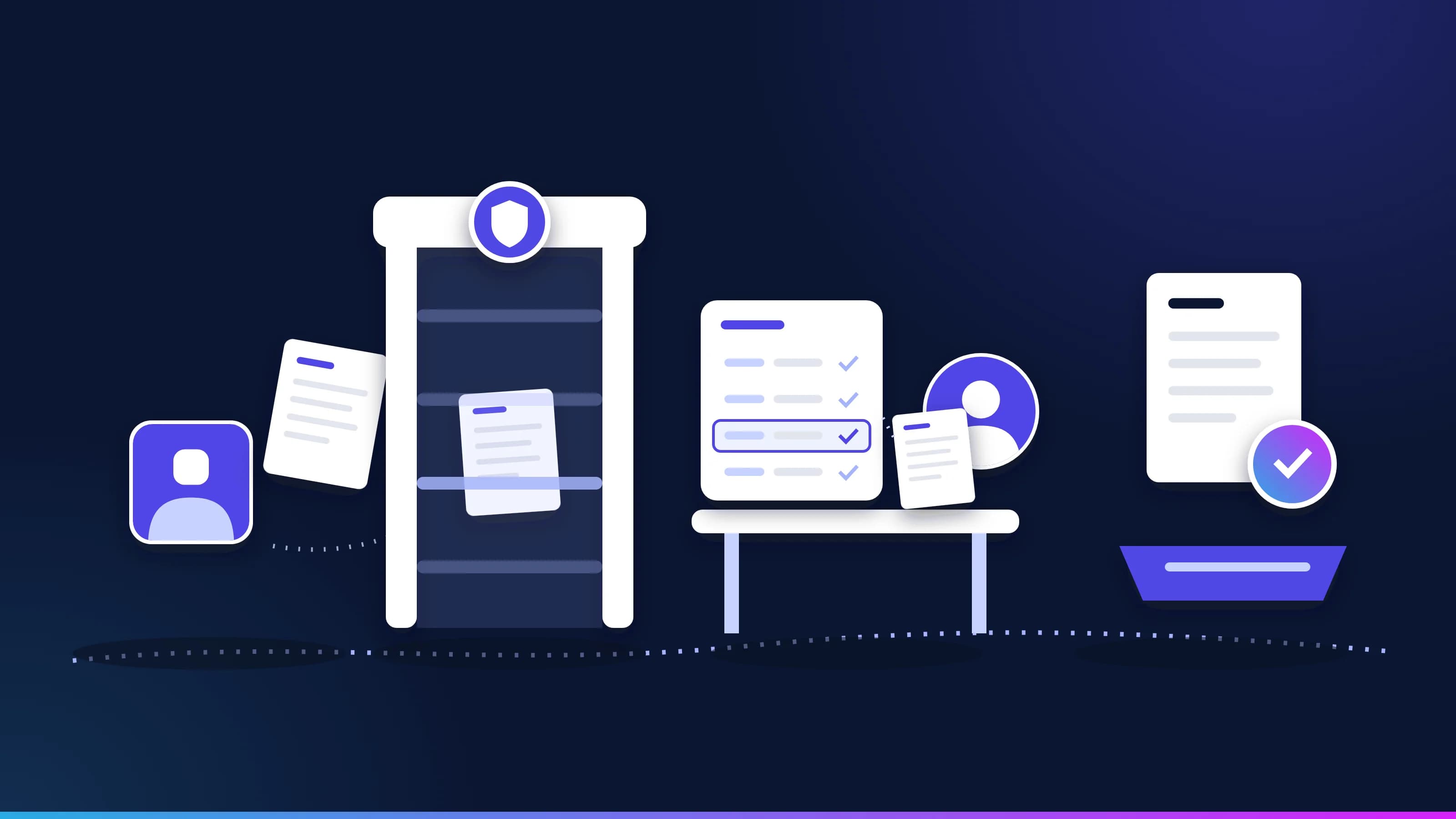
The bank’s account opens where it chooses to run it, and each Inovagio person is approved by name, steps and end date.
1
Step 1: Choose the work and sign the charter
The sponsor signs a charter: a target measured against today, a pass mark, a cost limit and when to stop. Legal, security and vendor risk review at the same time.
2
Step 2: Set up sign-in and access
Staff sign in with the bank’s own accounts. Each Virtual Employee gets its own identity, with no access.
What your examiner sees: The charter, the vendor reviews and the AI risk and impact assessment, and every person approved to work in the account.
Live, one kind of file at a time, with a stop for every scope
10
Step 10: Go live, one kind of case at a time
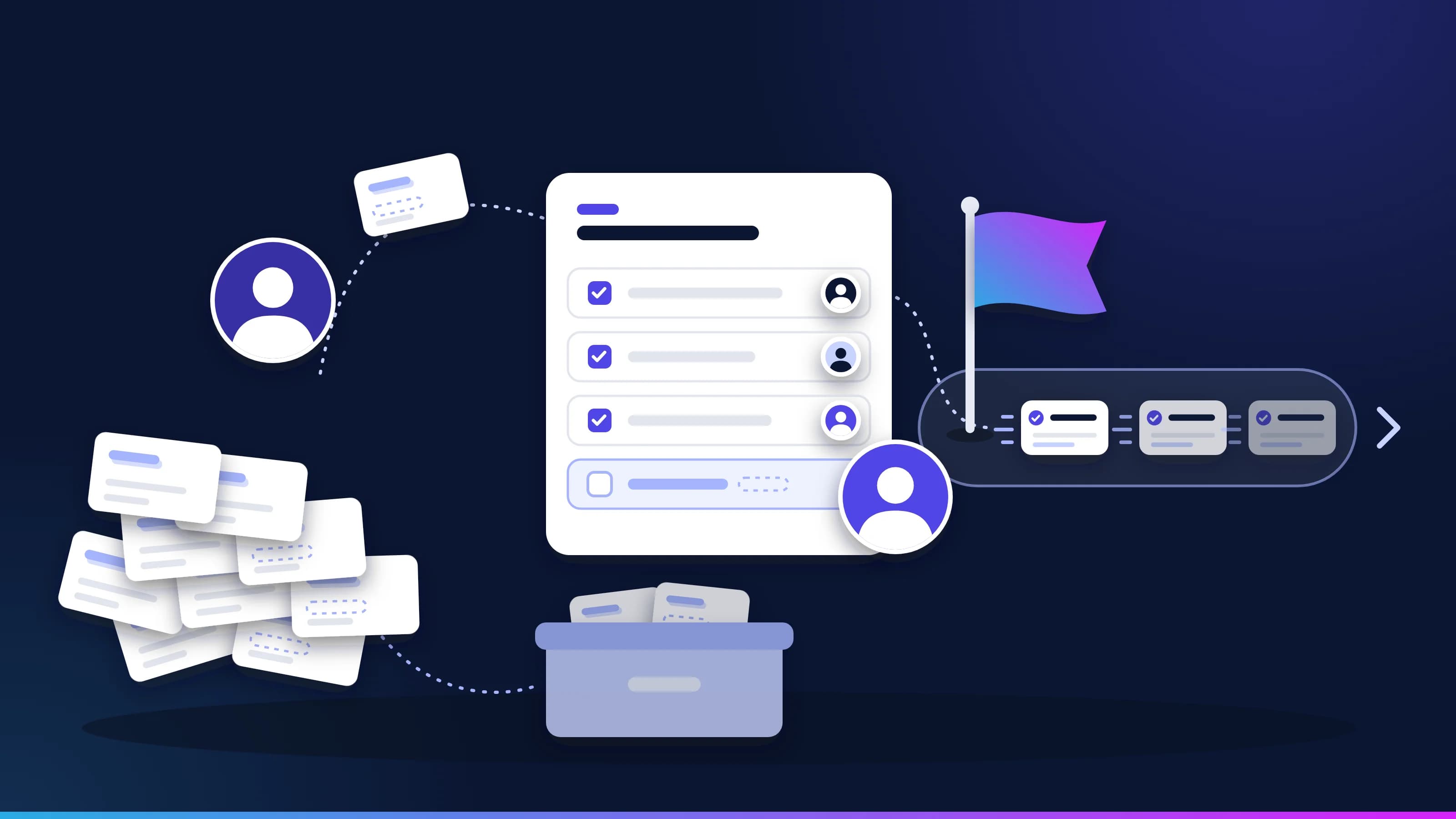
Each kind of file goes live on its own, spot-checked first, with write access granted one action at a time.
O
Operate: Operate: watch, re-test, decide
Every change is tested again and signed before it runs, and can be rolled back.
What your examiner sees: Logging, reversibility and shut-down, in every task’s record, every rule version and a stop for one Virtual Employee, a department or everything.
Income, identity and collateral documents checked against your credit policy, citing the document and the rule behind each finding.
Account opening
Applications and identity documents checked against your onboarding rules, with anything unusual sent to a person.
Servicing and reconciliation
Routine account and policy changes handled within the limits your procedures set, and premium, commission and bordereaux statements reconciled.
Insurance claim files
Each claim file audited against your state’s standards and its deadlines kept, with letters drafted. Adjusters make every claim decision.
Complaints and correspondence
Letters drafted in your templates and checked against your rules before a person sends them.
Exam and audit preparation
Every check, exception and approval in one record you can replay for an examiner.
Built for the people who answer for the work.
Chief operating officers
Routine files worked inside rules your experts approved, and the cost of every task shown beside today’s.
Risk, compliance and BSA officers
Exam requests, board exception reports and beneficial ownership answered from records, with every gap sent to its owner.
Heads of lending and claims
Experts spend their day on the files that need judgment, and approve the rules the AI follows.
Decisions about people stay with people.
Credit decisions stay with your lenders, claim decisions with your adjusters, and every exam response with your compliance officer. Moving money always needs a person (step 10).
Your data stays yours, end to end.
Alder Ridge Community Bank’s records stay in its own account, where it chooses to run, and never train anything for anyone else. Your rules, your record and the models trained on your approved results are yours.
Your credit policy, your files and your analysts don’t always agree.
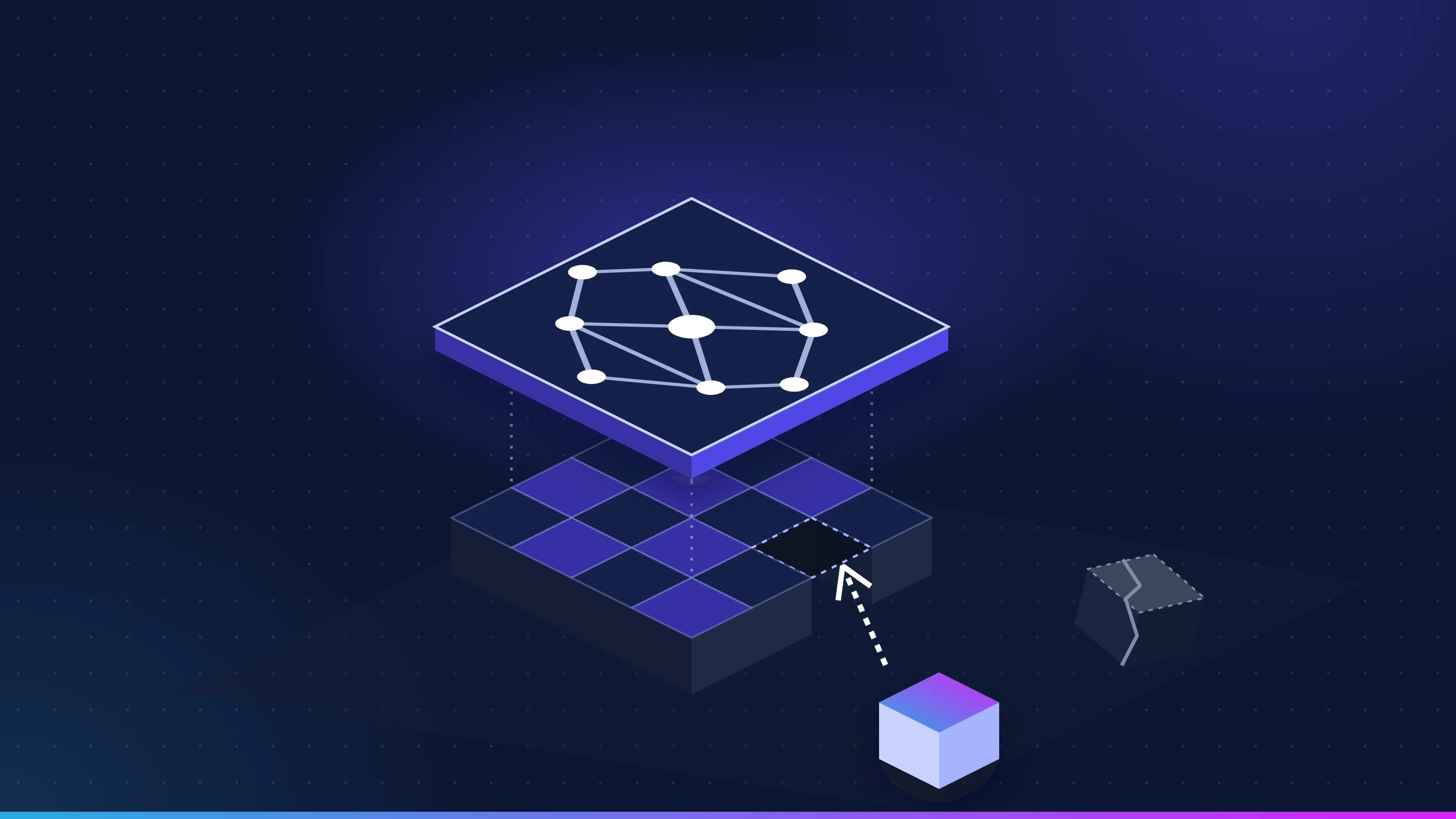
In her interview, Helen says every commercial loan needs two years of tax returns. Ravi says: “For a renewal on the same terms, we take last year’s return and this year’s statements. Everybody knows that.” Two other analysts agree. Inovagio flags the gap instead of guessing. Helen proposes a rule, and the loan committee adopts it: renewals on unchanged terms need the latest return and this year’s statements; new money still needs two years of returns, with this year’s statements. That approved rule is now followed on every file.
Every gap between policy and practice goes to the person who decides it; nothing is guessed.
Every rule quotes the words it came from, by the speaker’s role, and names who approved it.
Nobody approves their own change, and every change is tested again before it runs.
Rule review · Commercial renewals · Alder Ridge Community Bank · example company
What the policy says
“Every commercial loan needs two years of tax returns.”Chief Credit Officer · interview
What the team does
“Renewals on the same terms go ahead with last year’s return and this year’s statements.”Three analysts · interviews
The rule its owner approved
“Same-terms renewals: latest return and this year’s statements. New money: two years of returns and this year’s statements.”Proposed by the Chief Credit Officer, adopted by the loan committee
In force on every file. The Virtual Employees follow version 2, and each finding links back to the rule and the interviews it came from.
Works with the core, loan and claims systems you run.
We connect to each system the way it already supports, and reuse what exists before building anything new: read-only first, approved by the system’s owner, under its own limited identity (step 3). Your systems remain the system of record.
Core banking
ISO 20022 · Bank files
your core banking system’s published APIs, ISO 20022 messages and scheduled file exchanges
Loan origination
Published APIs · Loan-file exports
your loan origination system’s APIs and loan-file exports
Insurance policy and claims
ACORD forms · ACORD messages
your policy administration and claims systems’ APIs, and ACORD forms and messages
Documents and imaging
Content APIs · Scanned documents
your document system’s content APIs
Each kind of data gets its protections before any work runs.
Each protection is a rule your privacy and security teams approve, proven with planted test values and checked again before go-live (steps 4, 7 and 8).
Customers’ personal and financial data
Every prompt, response and tool call is screened inside your network. Logs keep the category and the count, never the value.
Card data
Card numbers are masked when they are read and never sent to a model.
Documents and email
Screened before a model reads them. An instruction found inside one carries no authority.
A short form with the questions that matter in banking, lending and insurance. We reply within one business day.
Financial services questions
What do state examiners check about AI?+
The CSBS supervisory framework for AI (September 2026) tells state examiners to check permissions, human checkpoints, logging, reversibility and the ability to shut automated work down. Each is a control here: a limited identity for every Virtual Employee, approval steps in your rules, a tamper-evident record, rule changes you can roll back, and a stop for one Virtual Employee, a department or everything at once.
Who makes the decisions?+
Your people. Credit decisions stay with your lenders, who sign off each file. Claim decisions stay with your adjusters: Virtual Employees audit the file, keep its deadlines and draft the letters, after your team has checked their work in shadow mode.
How does it help when the examiners send a request list?+
Each request is matched to the task records, rule versions, exceptions and approvals already on file, and anything missing goes to the officer who owns it. Your compliance officer reviews and approves every response before it goes out.
Does it work with our core, loan and claims systems?+
Yes. It connects to your core banking system through its published APIs, ISO 20022 messages and bank files, to your loan origination system through its APIs and loan-file exports, and to your policy administration and claims systems through their APIs and ACORD forms and messages, reading and writing under the permissions you set. Your systems remain the system of record.
Is our data used to train shared models?+
No. Your records train only models you own, and only on results your people approved.
Where does it run?+
On your servers, in your cloud, or hosted for you, with sign-in through your identity provider.
See how this works for your team.
A 30-minute briefing on one workflow of yours: whether it fits, what the first steps would be, and roughly what it would ask of your people. No data needed.