
Series · Why AI is stalling
AI only improves when it finds out fast whether it was right
A chess program that learned from every game it played, and therapists who did not get better with years of experience. What the two say about AI at work, and why every Inovagio task is checked.
Inovagio team · Published · Updated · 4 min read
On this page
People and machines get good at a task only when they find out quickly and clearly whether they were right. For AI at work, an AI feedback loop is that finding out: each result is checked, a miss is traced to its cause and the fix feeds the next version. Two well-known studies show the two ends of that line.
A program that learned from every game
#In 2018, DeepMind described AlphaZero in the journal Science (Silver et al., Science, 2018). It started with nothing but the rules of chess and learned by playing against itself. Every game ended in a result nobody could argue with, so every game told it whether its play had worked.
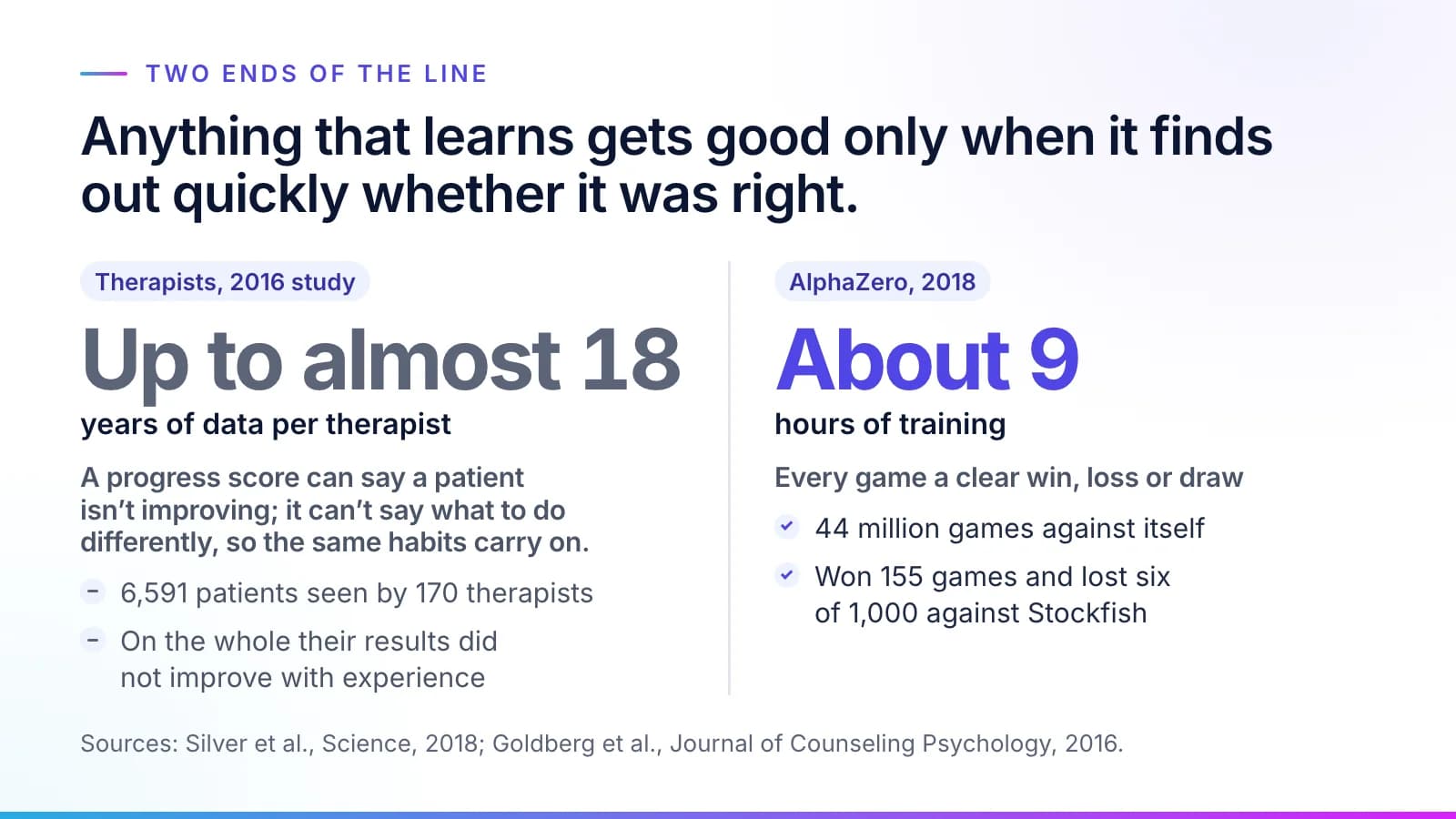
The numbers are the point. In training it played 44 million games against itself (the 2017 preprint's training statistics, Table S3), in about nine hours (DeepMind, December 6, 2018). Then, in a 1,000-game match against Stockfish, winner of the 2016 Top Chess Engine Championship, it won 155 games, lost six and drew the other 839.
Nine hours of fast, unambiguous answers took it past the engine that had won the 2016 championship.
Therapists who did not improve with experience
#Now the other end. A study in the Journal of Counseling Psychology followed the outcomes of 6,591 patients seen by 170 therapists, with up to almost 18 years of data per therapist (Goldberg et al., 2016). The researchers wanted to know whether therapists get better as they gain experience.
On the whole, they did not. Their results were in line with clinical trials, but as the years and cases added up, their patients' improvement did not grow. It declined very slightly. Some therapists did improve, but across the whole group the trend was a very small decline, and it held after the authors allowed for how severe each case was and how long treatment ran.
These therapists could see their patients' progress scores as therapy went on, so it wasn't that they were never told how things were going. The authors point instead to the kind of experience: years on the job are not the same as practice aimed at finding mistakes and working on them. A progress score can say a patient isn't improving; it can't say what to do differently, so the same habits carry on.
Most AI at work learns like the therapists
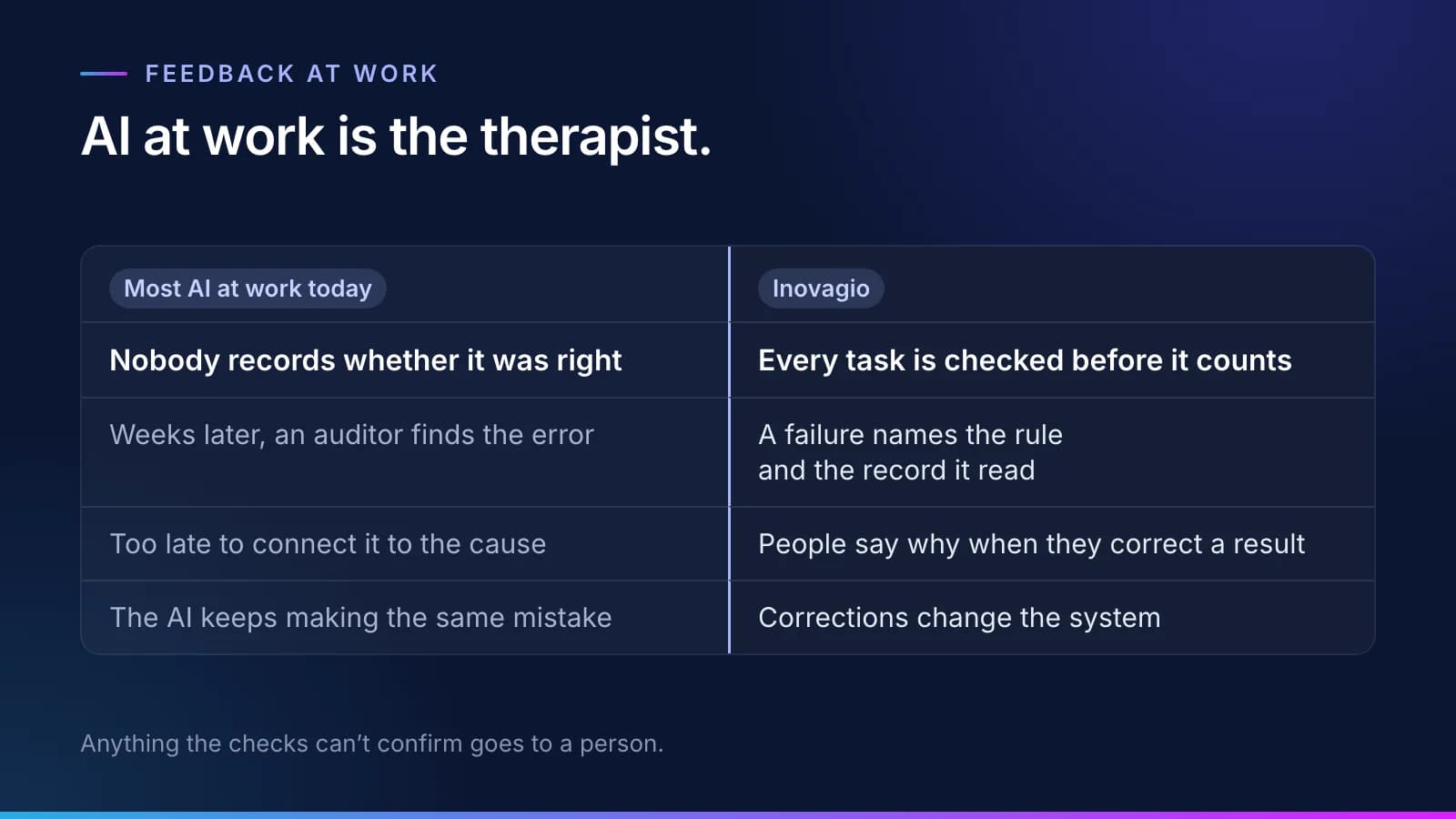
#AI at work drafts a letter or sorts a document, and nobody records whether it was right, which rule it missed, or why. Weeks later an auditor finds the error, long after anyone could connect it to the cause. Say an insurer's AI drafts claim letters, and some give the claimant the wrong state's deadline to appeal. If nobody records which rule those letters missed, nothing changes before the next file audit. The AI keeps making the same mistake, because nothing teaches it otherwise. It's one reason why AI projects fail at work.
Enterprise work rarely has a scoreboard as clean as a chess game, where the board itself tells you who won and nobody has to wait for an auditor. So it needs one built for it.
How Inovagio builds the AI feedback loop in
#Every task a Virtual Employee does is checked, and nothing counts until it is. Each result is checked against your approved rules and the records it used, and anything the checks can't confirm goes to a person. These are business rules, each with an ID on the record. A guardrail that filters what a model may say is a different control, and business rules and AI guardrails explains why regulated work needs both.
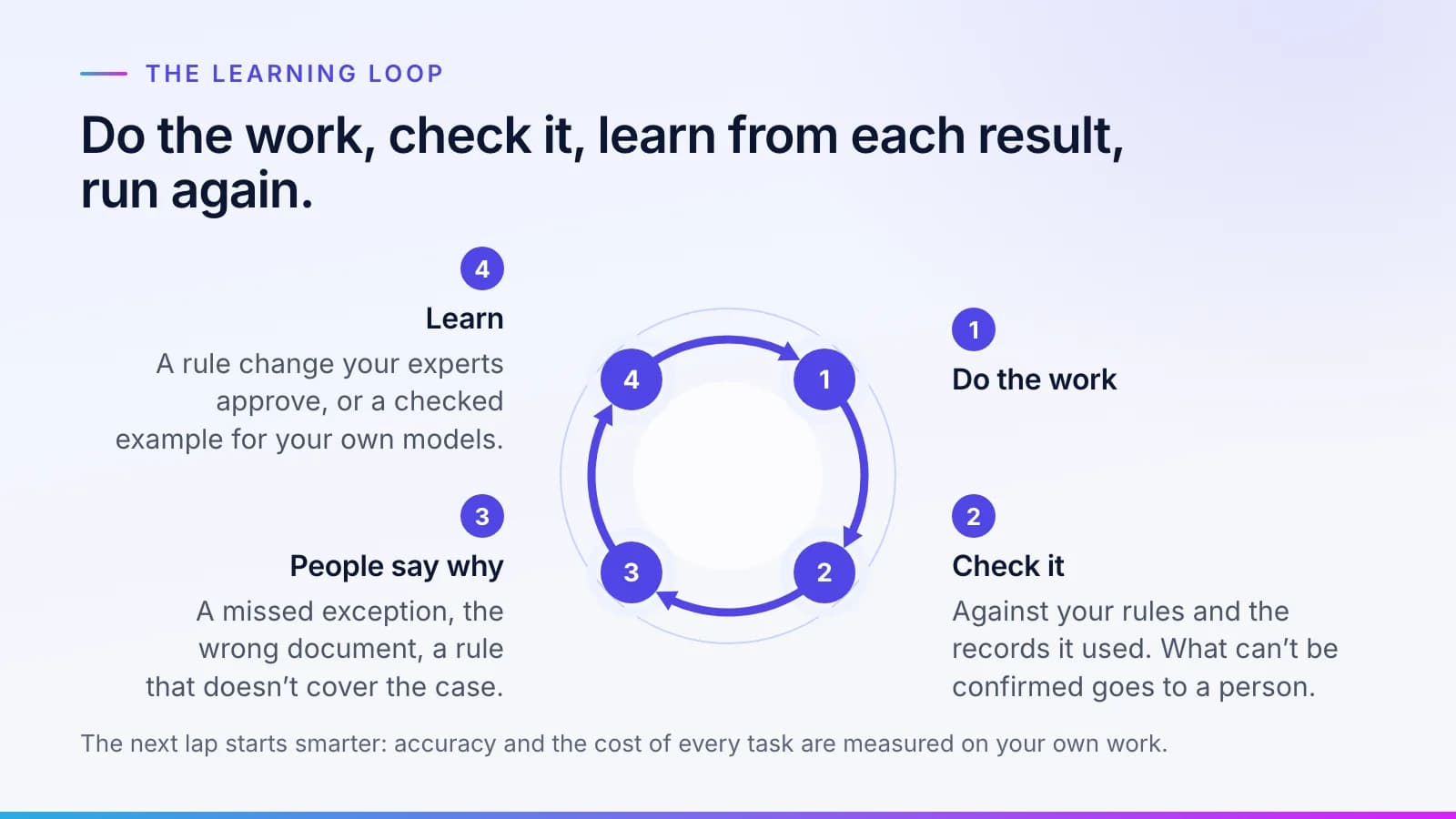
That check says more than a score:
- A result that fails names the rule it broke and the record it read, so a miss points to its cause.
- When a reviewer corrects a result, the reason is recorded with it: a missed exception, the wrong document, a rule that doesn't cover the case.
- A correction becomes a proposed rule change your experts approve in Synesis, or a checked example for training the next version of your own small models.
- Accuracy and the cost of every task are measured on your own work, so you can see each version do better than the last, or catch it when it doesn't.
That is the loop: do the work, check it against what your company knows, learn from each result, and run again. It is how the AI gets better at your work instead of simply getting older on it. The model never retrains itself on a correction; a mistake your team fixes once stays fixed because the fix becomes an approved rule.
If you'd like to see the loop on one of your own workflows, request a briefing.
Questions
What people ask.
Why does fast feedback matter for AI?
A system that learns needs to find out quickly and clearly whether it was right. Without that, it keeps making the same mistake, because nothing teaches it otherwise.
What did the study of therapists find?
Following 6,591 patients seen by 170 therapists, the researchers found that on the whole their results did not improve with experience. The authors point to the kind of experience: years on the job are not the same as practice aimed at finding mistakes.
How does Inovagio check a result?
Each result is checked against your approved rules and the records it used. A result that fails names the rule it broke and the record it read, and anything the checks can't confirm goes to a person.
What happens when a reviewer corrects the AI?
The reason is recorded with the correction. It becomes a proposed rule change your experts approve in Synesis, or a checked example for training the next version of your own small models.
The products, industries and examples it covers.
- Knowledge layerSynesisTurns your policies, procedures, records and your people’s know-how into a rulebook your experts approve, which you own and can take anywhere.
- Model trainingForgeTrain task-specific models on your data, with the evidence built in.
- Governance and auditPhylaxSign-in, policy, secrets and one audit trail from the screen to the disk, so you can show any examiner what happened.
- IndustryInsurance claimsEach claim file audited against your state’s standards, deadlines kept with letters drafted, and bills checked. Adjusters decide.
- OverviewHow it worksTen checked steps from your first decision to the day it handles real cases.
Read next.
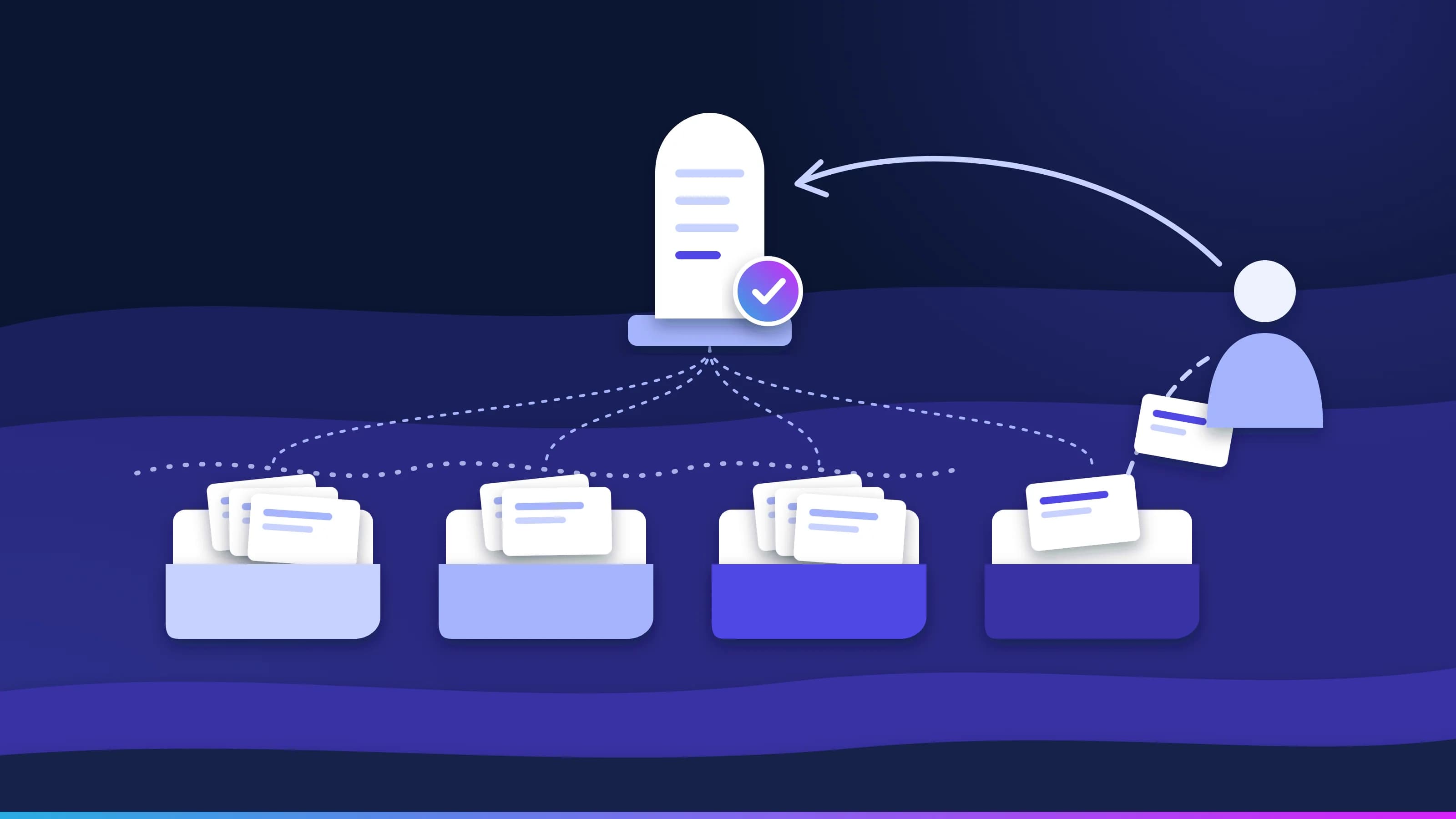 Article · Learning loopA mistake your team fixes once stays fixedGood AI exception handling doesn't stop at the flag. Every task moves through four queues, every failure reaches a named person with the reason attached, and that person's fix becomes an approved rule, so the same exception doesn't come back next week. · updated November 18, 2026 · 8 min read
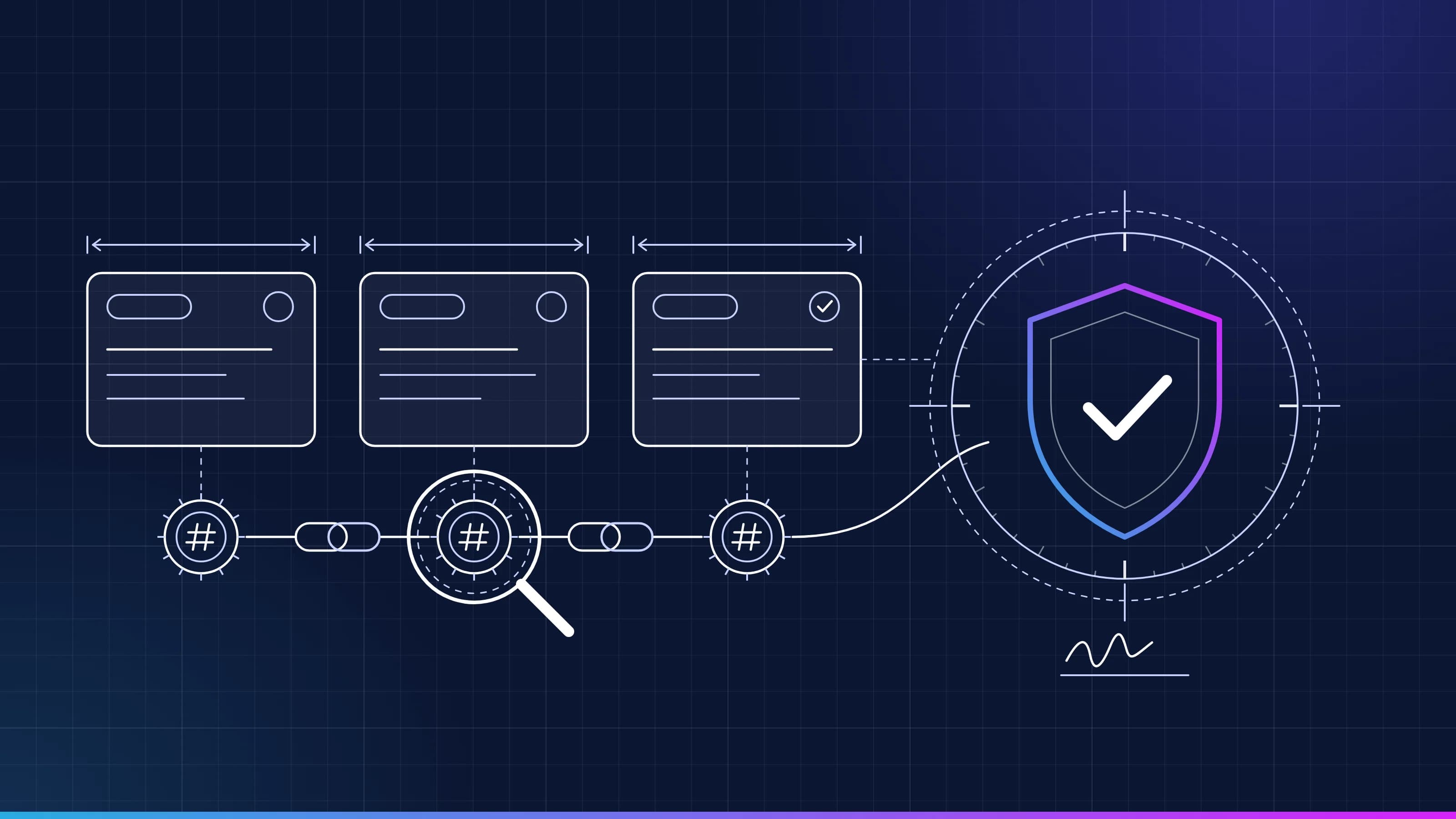 Guide · AI audit trailRead a task recordEvery task Inovagio runs leaves a tamper-evident record. Here is what each line means, how the seals chain together, and how to replay a task end to end. · updated November 18, 2026 · 5 min read
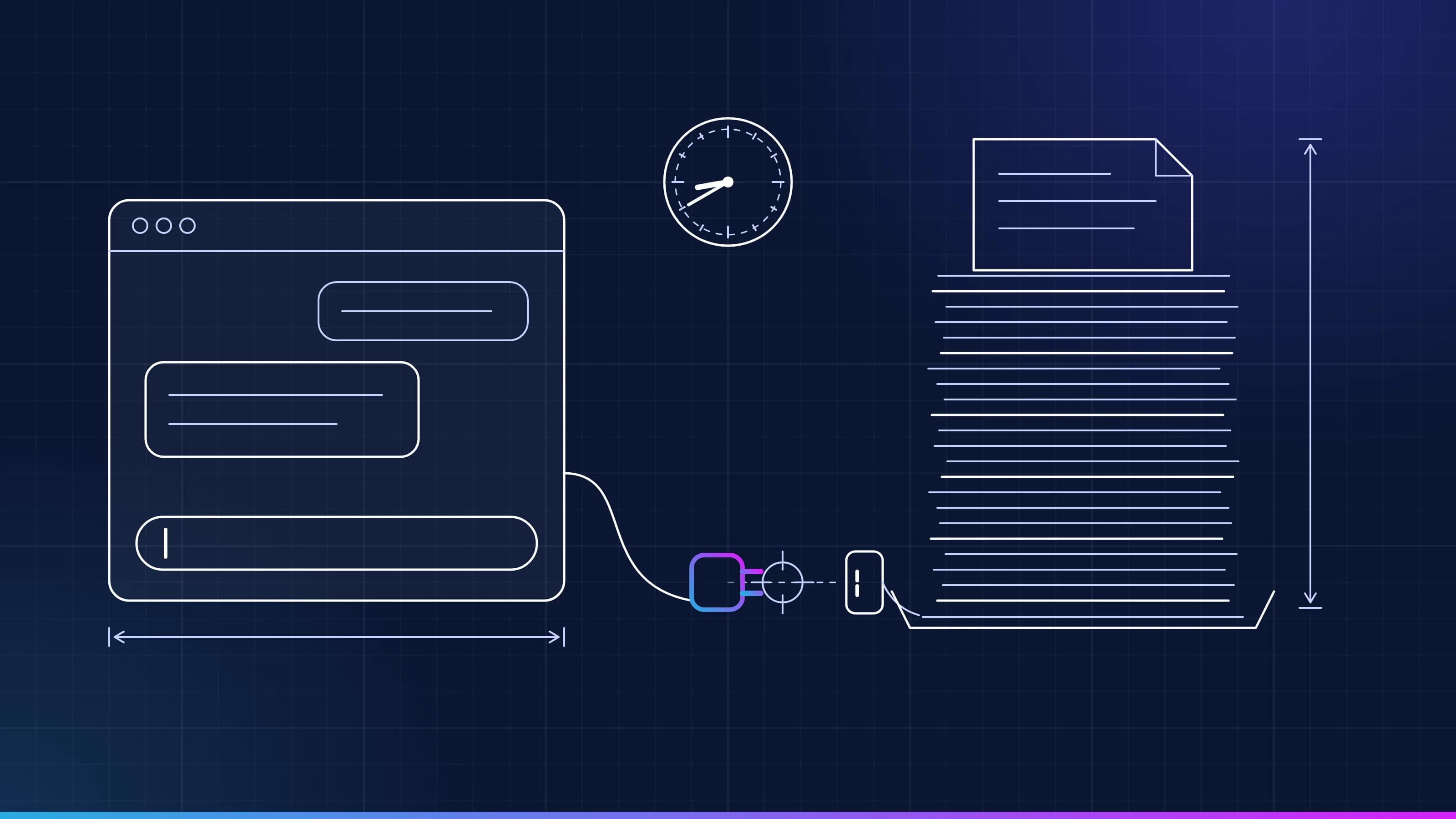 Article · ApproachWhy AI at work stallsMost AI at work stalls because it doesn't know your team's rules and waits to be asked. Here is why AI projects fail in operations, and what changes when the routine queue goes to a worker that knows them. · updated November 18, 2026 · 8 min read
Get the next one
New articles and guides, at most once a month.
Occasional news for teams putting AI to work in regulated industries. Unsubscribe in one click.