
ForgeModel training
Train task-specific models on your data, with the evidence built in.
Trains open models on your approved work for specific tasks, checks safety and quality, and hands them to Origin.
We’ll spend 30 minutes with you on one of your workflows, and you don’t need to share any data.
- Synesis
- Virtual Employees
- Agent Harness
- Opsis
- Origin
- Phylax
- Operations
- Platform services
Firm model v5 · run 14
Fine-tuning a small open model on approved intake work · blueprint intake-v2
Training loss
0.36
−0.02 since last checkpoint
Score vs approved
94.1%
Gate at 92%
Safety evaluation
Pass
Red-team set
Time left
38 min
On 2 GPUs
Training curve
— Training loss— Validation loss
Score against approved results, by checkpoint
| Step | Score | Gate |
|---|---|---|
| 400 | 78.4% | Below |
| 800 | 86.0% | Below |
| 1,200 | 90.2% | Below |
| 1,600 | 92.5% | Pass |
| 2,000 | 93.6% | Pass |
| 2,400 | 94.1% | Pass |
- Synesis
- Virtual Employees
- Agent Harness
- Opsis
- Origin
- Phylax
- Operations
- Platform services
Intake · approved results
Only work a person approved · each example linked to its task record
Approved results
9,412
Last 6 months
Duplicates removed
318
Near-duplicates too
Held out for scoring
1,200
Never trained on
Decontaminated
Yes
Train and test apart
Examples
| Example | Task type | From task | Split |
|---|---|---|---|
| EX-40211 | Intake routing | TR-88104 | Train |
| EX-40212 | Conflicts summary | TR-88117 | Train |
| EX-40213 | Engagement letter | TR-88120 | Test |
| EX-40214 | Clause extraction | TR-88131 | Train |
| EX-40215 | Intake routing | TR-88136 | Train |
| EX-40216 | Conflicts summary | TR-88142 | Test |
Example EX-40213
- Task
- TR-88120 · engagement letter
- Rule cited
- Engagement terms v3
- Approved by
- Practice partner
- Edits before approval
- 2, kept as the target
- Personal data
- Masked before training
- Provenance
- Task → record → dataset v7
Trained only on the firm's own approved work.
- Synesis
- Virtual Employees
- Agent Harness
- Opsis
- Origin
- Phylax
- Operations
- Platform services
Firm model · versions
Every version signed, with its model card and evidence pack
| Version | Score | State |
|---|---|---|
| v5 | 94.1% | Training |
| v4 | 93.4% | Promoted to Origin |
| v3 | 90.8% | Kept for rollback |
| v2 | 86.2% | Archived |
| v1 | 81.5% | Archived |
Promoted · v4
Served- Served by
- Origin · intake and conflicts tasks
- Approved by
- Head of practice operations
- Gates
- Task score, regression, safety, calibration
- Signed
- Weights and evidence pack
- Rollback
- To v3 in one step
Relative cost per task
- Mid-size model · 30B1.00×
- Firm model v40.22×
On the intake tasks it serves, at the same score.
Forge › Training run: the training curve and the score against approved results, by epoch. Sample data from Inovagio’s example companies.
Where Forge works
Forge isn’t named in a step of the onboarding. It is part of the platform every step runs on.
What Forge does
Forge is Inovagio’s model training pipeline: it curates your data, fine-tunes and aligns open-weight models for specific roles and tasks, evaluates them against safety and quality gates, and produces a signed model with its evidence pack ready to serve on Origin.
Data you can trust
The data pipeline curates, deduplicates, decontaminates, tiers and packs training data, and records the provenance of every source.
Fine-tuning and alignment
LoRA fine-tuning plus supervised, preference and reinforcement methods turn an open-weight base into a model for one role or task.
Repeatable blueprints
A job is defined by a blueprint that fixes architecture, training regime, data and quality thresholds, so runs are repeatable.
Gates before deployment
Task score on held-out approved work, regression against the serving version, safety and calibration gates must pass, and a deployment approval is recorded before a model ships.
Evidence for every model
Each trained model gets a model card, a software bill of materials and a signed evidence pack mapped to the frameworks you select.
Signed artifacts
Checkpoints and finished models are signed and exported in formats Origin serves directly. The trained weights are yours, under the base model’s license.
CPU, Apple silicon or GPU servers
The same pipeline trains on CPU, Metal or CUDA GPUs, from a single workstation to multi-node clusters.
Everything Forge does, by area.
Data
- Text and columnar data sources
- Curation with readability and pattern filters
- Train/test decontamination
- Curriculum tiering and deterministic sampling
- Sequence packing
- Provenance chain for every dataset
Training
- LoRA fine-tuning of open-weight bases
- Transformer, mixture-of-experts, state-space and hybrid architectures
- DPO, KTO, ORPO, PPO, RLVR and distillation trainers
- Reward-model training
- Adam, AdamW, SGD, Lion, LAMB, Adafactor and Muon optimizers
- Cosine, linear-warmup, one-cycle, cyclic and polynomial schedules
- Distributed data, ZeRO, sequence and expert parallelism
Evaluation and release
- Task-score gate on held-out approved results, scored by your own checks
- Regression check against the version in service
- Safety evaluator and red-team gate
- Calibration check
- Perplexity and loss sanity checks
- Deployment approval with change-approval records
- Model card and SBOM builder
- Signed evidence bundle
- GGUF export for serving
What Forge replaces
Forge does the work of these, inside one platform with one identity, one policy and one record:
- Script-based fine-tuning toolchains
- Training-data cleaning and decontamination tools
- Experiment tracking and model registry tools
- Manual model evaluation and sign-off
- Separate documentation for each model
The controls Forge brings
Every Inovagio product keeps the same five commitments, because regulated work needs all five at once.
Security
Training data and weights stay inside your security perimeter.
Governance
Safety and quality gates decide whether a model may ship.
On the record
Each model carries its data lineage, model card and evidence pack.
Monitoring
Every training run is tracked with its metrics.
Cost per task
Small task models take on the work you run most, each measured by its cost per correct task.
Forge in your industry
Forge runs the same way in every industry Inovagio serves. See the work in yours.
- Financial servicesBanks, credit unions, lenders and insurersWorked example: Alder Ridge Community Bank · Example company
- Healthcare providersHealth systems, hospitals and physician groupsWorked example: Meridale Health · Example company
- Health plansMedicare Advantage, Medicaid and commercial plansWorked example: Ashgrove Health Plan · Example company
- LegalLaw firms and in-house legal teamsWorked example: Calloway Finch · Example company
- GovernmentState, county and city agenciesWorked example: City of Larkhaven · Example company
- DefenseDefense contractors and their suppliersWorked example: Keelstone Aerospace · Example company
- Finance operationsFinance teams in any industry
For developers: Forge at a glance
- Interfaces
- REST and gRPC APIs; C API for embedding
- Compute
- CPU, Metal and CUDA
- Output formats
- GGUF and safetensors with provenance metadata
- Compliance frameworks
- Configurable rulebooks mapped to the frameworks you report against
- Deployment
- On your hardware or in your cloud, inside your security perimeter
Forge in the platform.
Where Forge fits
One platformAgent HarnessAgent harness
Inovagio CLIInovagio DesktopWeb ChatInovagio SDK
OpsisExperience layer
FolioMorphe
Virtual EmployeesVirtual Employee layer
NexusErgon
SynesisKnowledge layer
PerceptionMNEMOS
Origin (this layer)Model layer
Inference ServerForge (this product)
PhylaxTrust layer
AuthInovagio SecretsGuard
OperationsOperations
PanoptesArchon
Platform servicesPlatform services
ServerAPI ManagementConnect
Further reading
Guides and posts on Forge
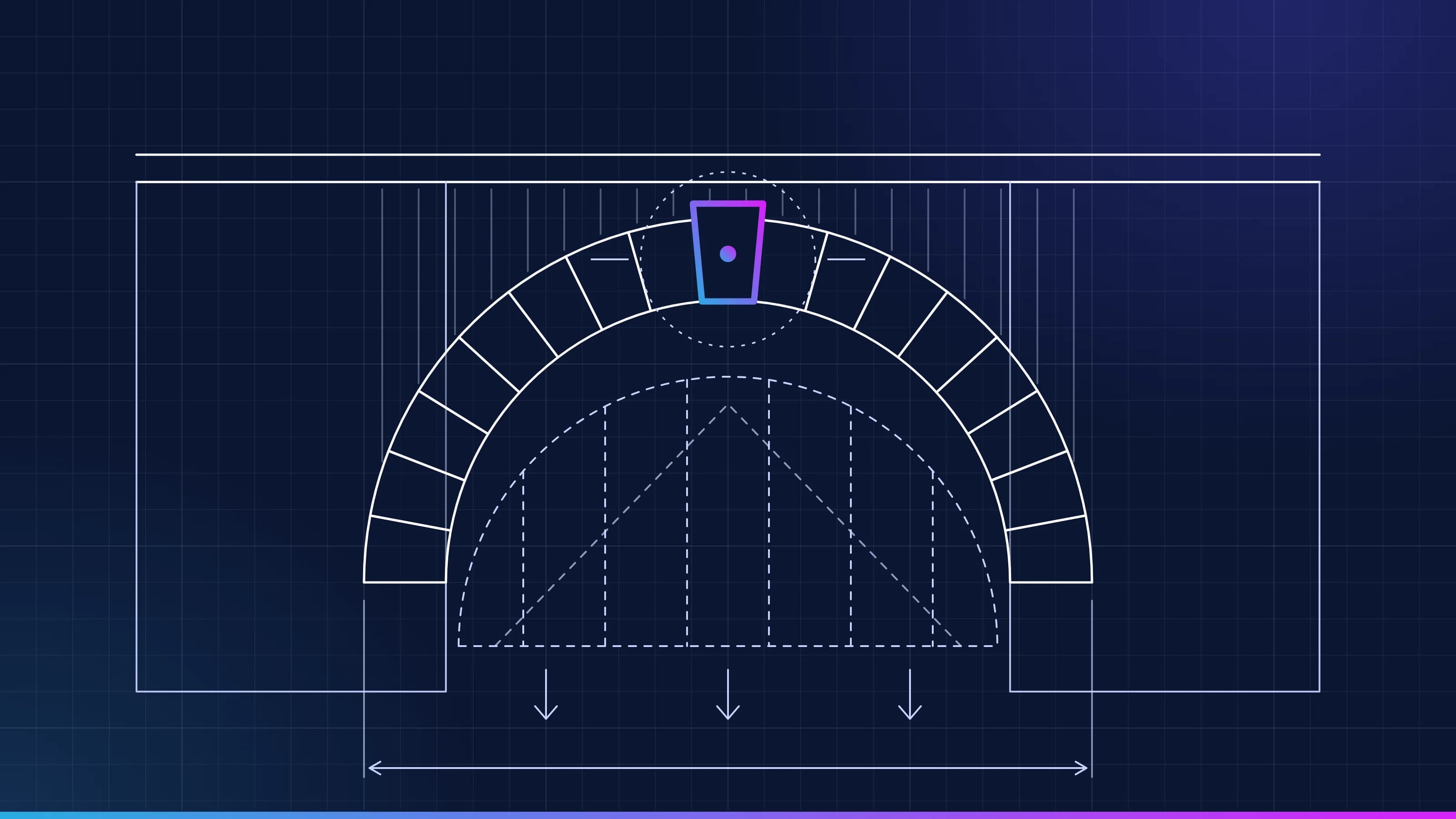 Article · OwnershipForward-deployed engineers: what you should ownMore AI vendors now send forward-deployed engineers to build inside your company, and Gartner predicts most of those systems will be abandoned. Here's what leaves with the engineers, what to write into the contract, and what you should own on the day they go. · updated November 20, 2026 · 9 min read
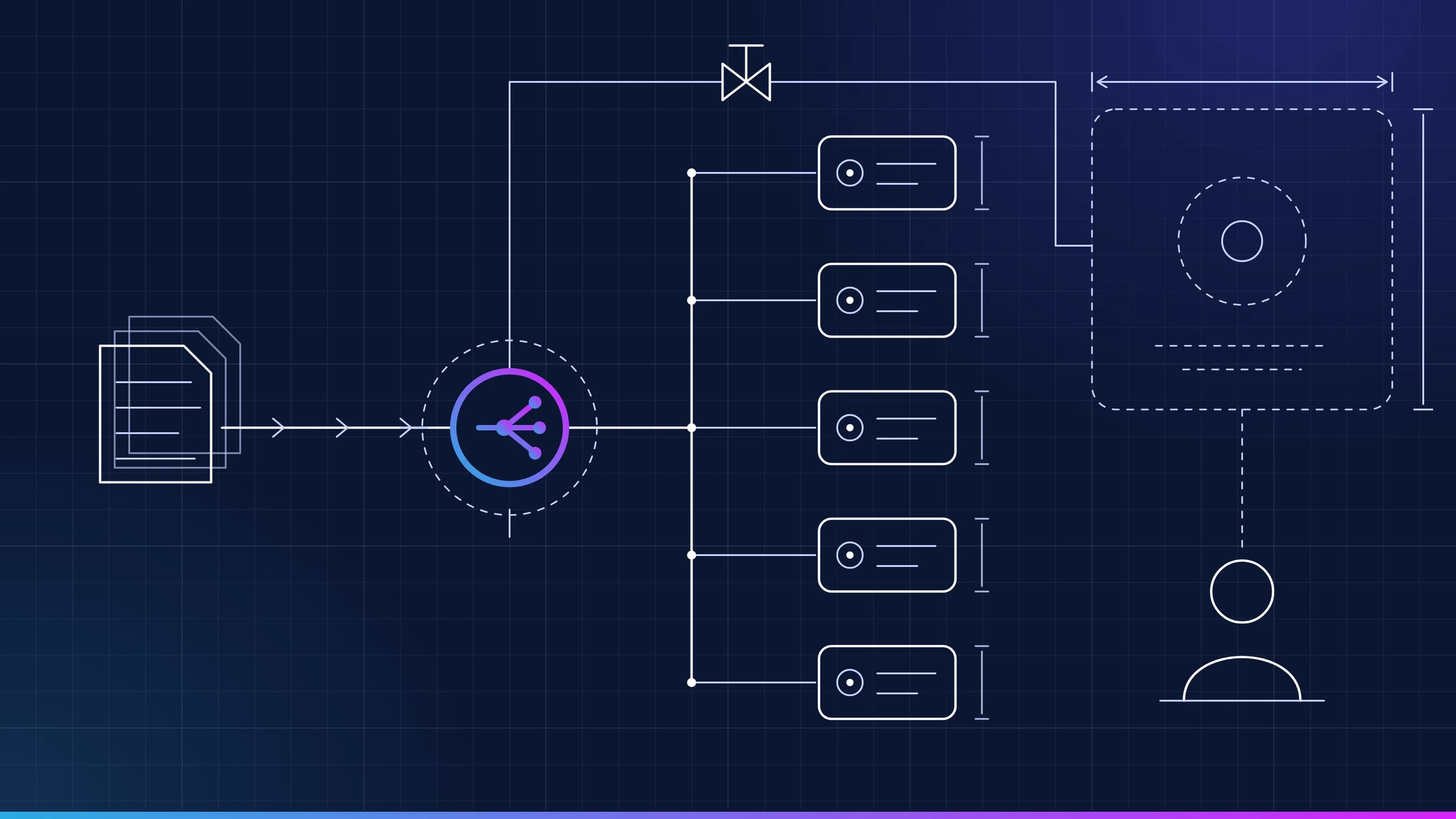 Guide · Small language modelsSLMs for enterprise AI agents: routing, fine-tuning and limitsHow to move an enterprise agent's routine model calls to small language models without losing accuracy: the published conversion method, routing and escalation, LoRA fine-tuning, the gates a model passes before it serves, hardware sizing with worked numbers, and where small models still fail. · updated November 18, 2026 · 18 min read
 Article · Small language modelsSmall language models: why smaller AI does most business workMost steps an AI agent takes at work are narrow, like reading a field or sorting a document. A small language model can do them on your own server. Here's what the research says about how much work fits one, and where small models still fall short. · updated November 18, 2026 · 10 min read
 Article · ApproachAI only improves when it finds out fast whether it was rightA chess program that learned from every game it played, and therapists who did not get better with years of experience. What the two say about AI at work, and why every Inovagio task is checked. · updated November 20, 2026 · 4 min read
 Article · ApproachFaster AI makes owning it more valuableIf AI models keep improving this fast, why own any of it? Because a better model still doesn't know your business, and every layer you own gains value with each new model. · updated November 20, 2026 · 3 min read
See Forge on one of your workflows.
Every project starts with one workflow your people know well, measured against what it costs you today.