
Series · How we solve it
The model is a replaceable part
The best AI model this quarter won't be the best next quarter. When you can switch AI models without touching your rules, approvals or audit record, every better model shows up on the scoreboard in your cost per correct task.
Inovagio team · Published · Updated · 7 min read

On this page
Model-agnostic AI keeps the model a replaceable part: you can swap or upgrade it while your rules, approvals and records stay where they are.
At the spring budget review, a finance team approves an AI project built on the model that led the benchmarks that month. By the autumn review, two newer models have passed it, and the vendor's answer to "can we move?" is a migration project with its own budget line. The CFO asks, fairly, why a better model should cost the company a project.
It shouldn't. You should be able to switch AI models the way you change suppliers: on the evidence, without rebuilding anything else. If an upgrade means retesting every workflow and rebuilding what the AI knows about your business, the model was never a part. It was the foundation, with everything else poured on top of it. For a business that has to keep its rules and its records for years, the model has to be the one piece built to come out.
How fast the best AI model for business changes
#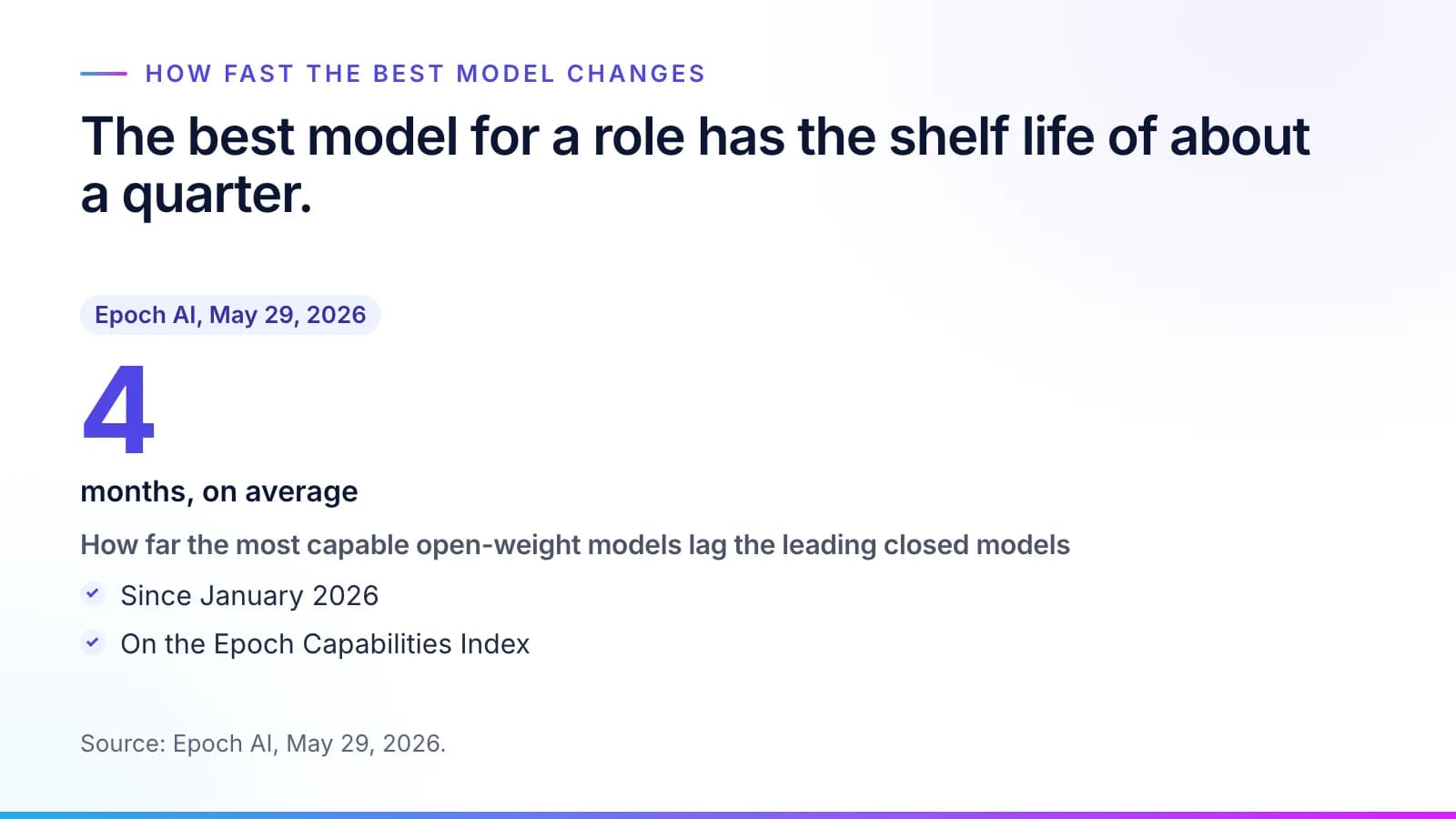
Epoch AI, which tracks the capabilities of AI models, found that since January 2026 the most capable open-weight models have lagged the leading closed models by an average of four months on its Epoch Capabilities Index (Epoch AI, May 29, 2026). The frontier keeps moving. The models you can run on your own hardware follow a few months behind.
That gives "what is the best AI model for business?" a shelf life of about a quarter. Anyone signing a three-year commitment should ask something else: which parts have to stay exactly where they are when the model changes.
What changes when you switch AI models, and what doesn't
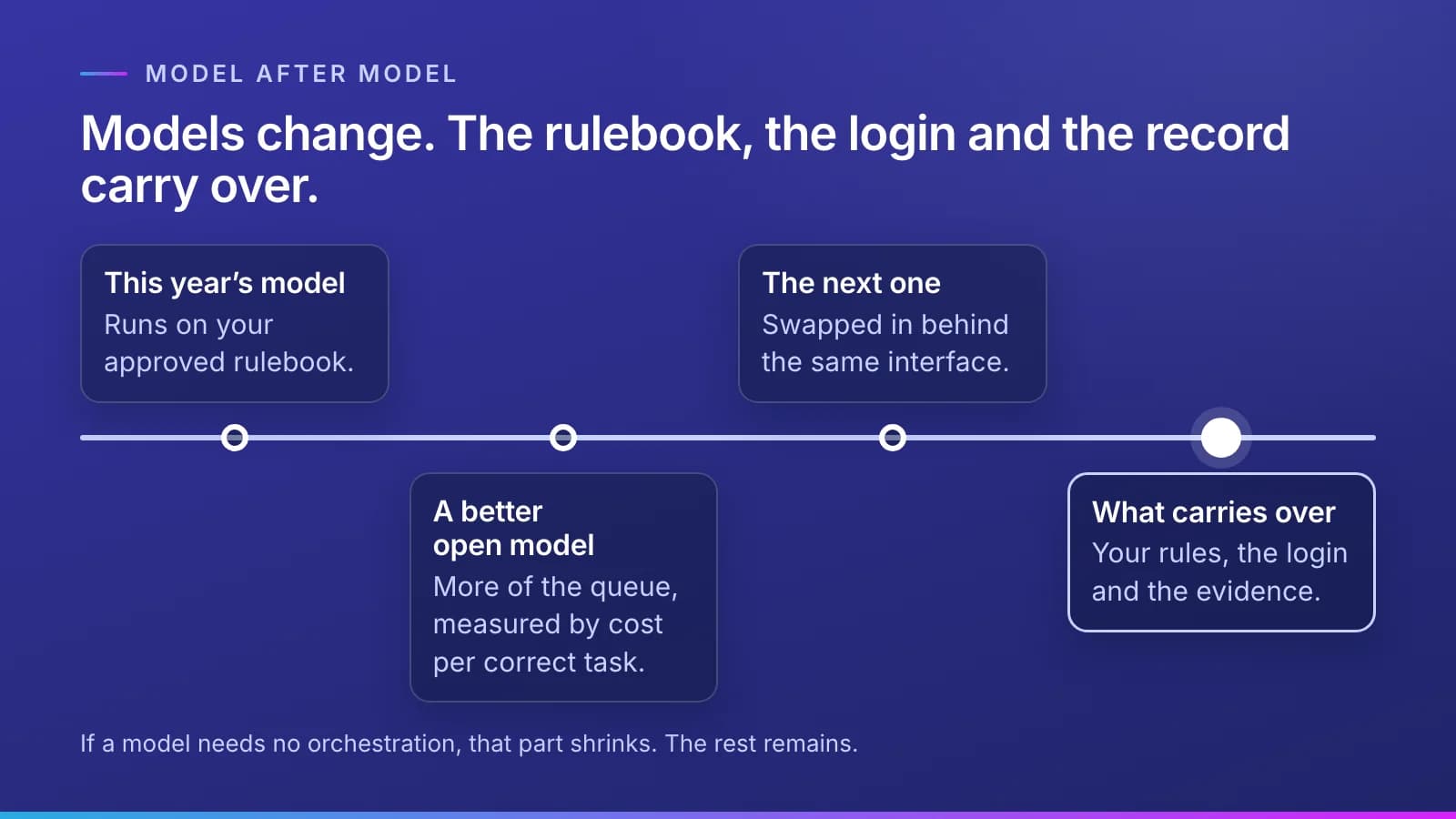
#Each Virtual Employee runs on a base model family you choose, behind one interface. Swapping or upgrading the model touches nothing else. The rulebook and its approvals stay as they were, and so do the identity and the audit trail.
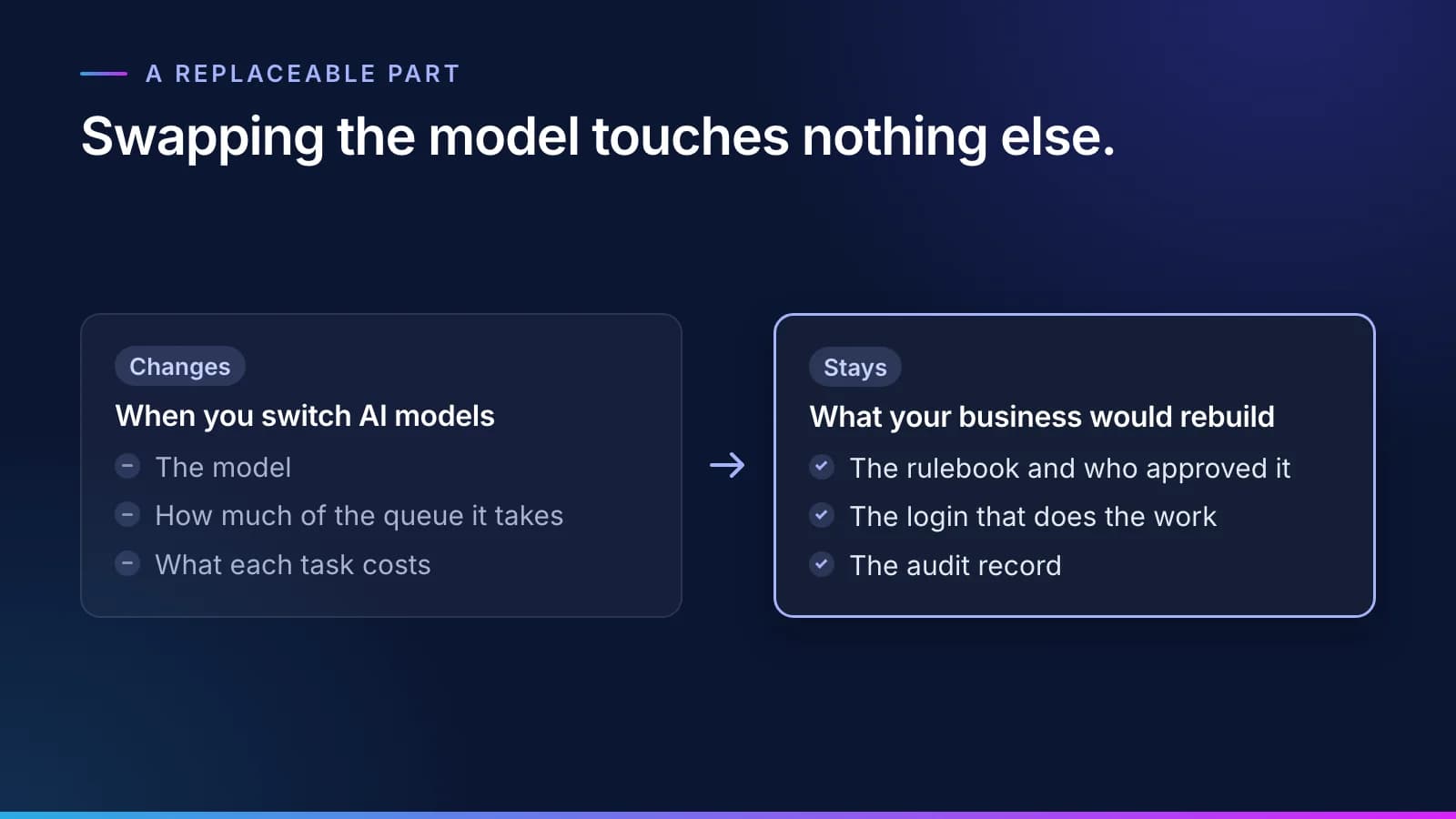
What changes is how much of the queue the Virtual Employee can take and what each task costs. What stays is everything your business would otherwise have to rebuild and approve again: which rules apply, who approved them, the login that does the work, and the record showing the work was done correctly.
That split is why we call the model a replaceable part. It is also why we never sell on the claim that our model knows more than anyone else's. The model is the part we expect you to change.
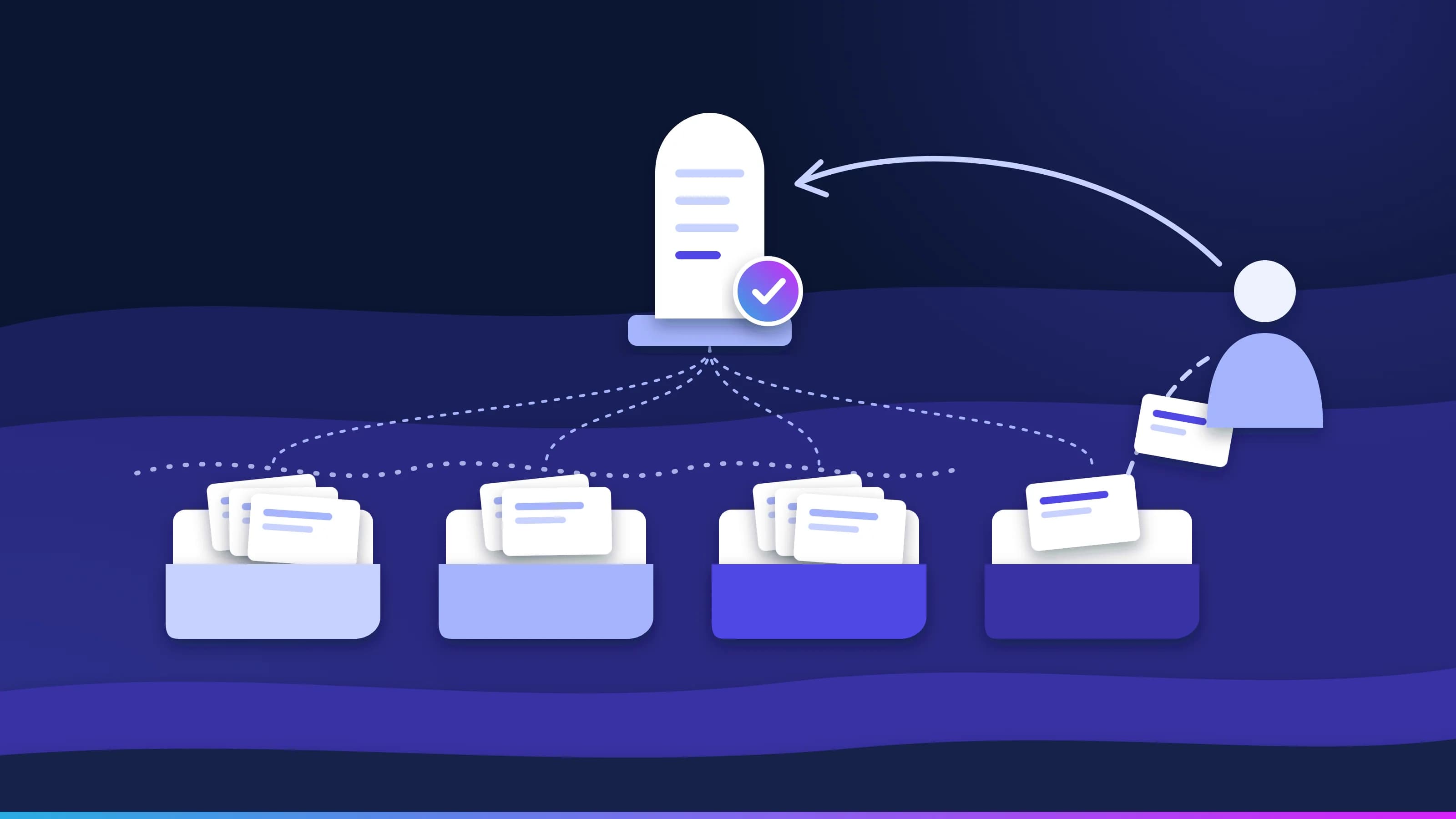
Your business knowledge lives in the approved rulebook, outside the model. A correction becomes a rule that any model reads the same way, which is why a mistake your team fixes once stays fixed through every upgrade.
Model-agnostic AI with a record of where the model came from
#Model-agnostic AI is easy to say and harder to run in a regulated business. A procurement team will ask where the base model came from, and some have policies about the model's country of origin. So each role is offered on a choice of open-model families. The base family is a field on every task receipt, and the model family each role runs on is listed on the scoreboard and answered on the trust page.
Routine work runs on open models tuned on your data and served by Inovagio's own engine, Origin on the Inference Server. There is no per-word bill to an outside AI lab, and small language models for business explains why the routine work suits smaller models. Outside models are off by default. Only an administrator you name can turn one on, and only for the tasks they choose.
A model upgrade is a decision with a number on it
#Because nothing moves except the model, a finance team can decide an upgrade on evidence, the way it would a new supplier.
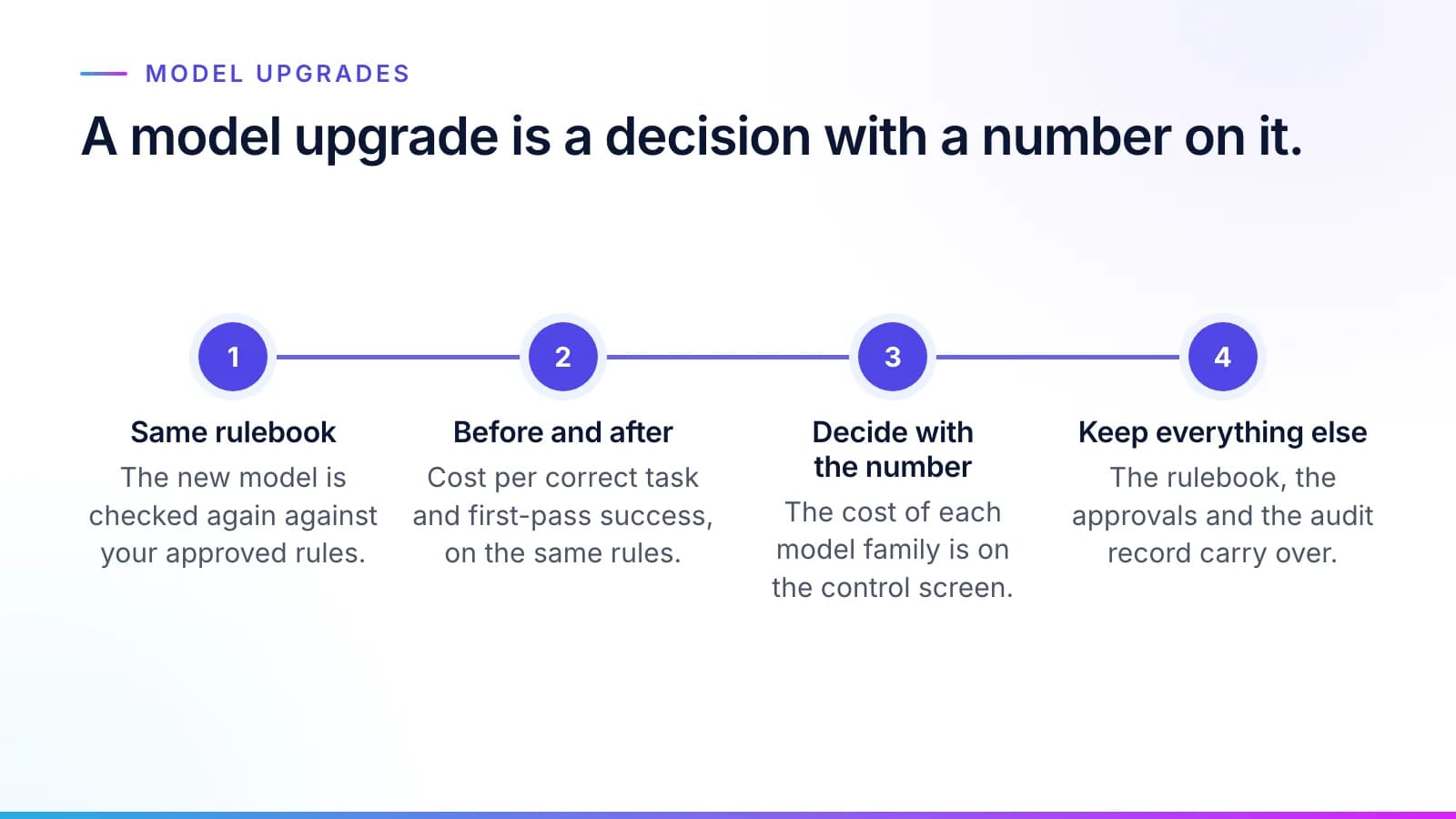
- Run the new model on the same rulebook. Every upgrade is checked again against your approved rules.
- Compare before and after. Cost per correct task and first-pass success are shown for the old model and the new one, on the same rules.
- Decide with the number. Every task's cost record shows the model it ran on, so the choice to move has a figure attached.
- Keep everything else. Your rulebook and its approvals carry over as they are, and so does the audit record.
Tip
Put one question to any AI vendor before you sign: if we change the model next year, what else has to change? The answer tells you whether the model is a part or the foundation.
When a role moves to a newer model, the scoreboard shows its numbers from before the move and after it. You see what each better model changes, on the same rulebook, and nobody has to call it a migration. A health plan that moves its premium reconciliation to a newer model, for example, keeps the same matching rules and the same reviewers, and compares the cost per correct task under each model.
How a better model shows up in cost per correct task
#Cost per correct task counts everything the work costs: AI and compute, the share of the platform fee, the minutes your people spend reviewing, and rework, all divided by the tasks done correctly. The control and cost page sets out each input.
A better model moves that number mainly through the tasks. It gets more of them right the first time, so fewer reach a person and fewer come back as rework. Any change in what the newer model costs to run shows up on the cost side as well. The Virtual Employee then takes on more of the queue, and the scoreboard shows what each task costs. To measure it against your own baseline, follow the guide to measuring cost per correct task.
What if models get good enough to need no help?
#
It is the obvious question. If models keep improving, one will eventually arrive that can do the work with nothing around it.
Then more of the work moves to your Virtual Employees. The part a better model could absorb is the orchestration, the code that turns a model's answers into steps. That part would shrink. What a business needs would not: its rules written down and approved, a login for whoever does the work, and evidence that the work was done correctly. That holds for a person, for today's Virtual Employee and for a model good enough to need nothing else.
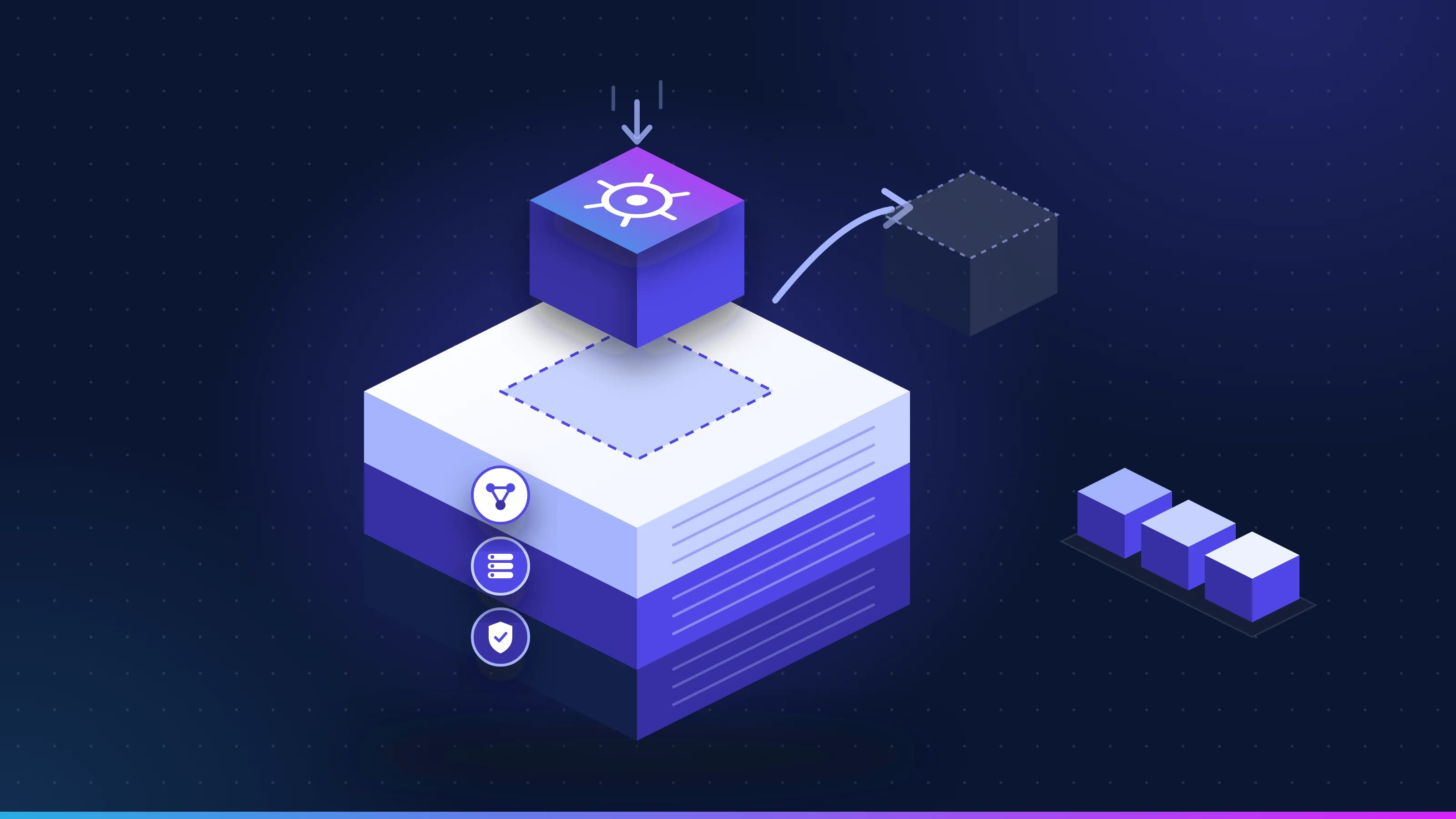
We made the longer case in why faster AI makes owning it more valuable: every layer you own gains value as the models improve. This piece is the operating half of that argument. Choose the model you want this year, and plan to change it.
For the other questions buyers ask about models and what they cost, read our Virtual Employees questions and answers. To see what an upgrade would look like on one of your queues, request a briefing.
Questions
What people ask.
Can you switch AI models without rebuilding everything?
Yes, when the model sits behind one interface and nothing else depends on it. Each Virtual Employee runs on a model family you choose, and swapping or upgrading it leaves the rulebook, the approvals, the identity and the audit record as they were. The scoreboard shows cost per correct task and first-pass success before and after the change, on the same rules.
What is the best AI model for business?
The best one this quarter is probably not the best one next quarter. Epoch AI found the most capable open models trail the leading closed models by about four months on average. Choose a model family for each role on cost and where the model came from, measure cost per correct task on your own work, and keep the freedom to move when a better one arrives.
What does model-agnostic AI mean?
Model-agnostic AI doesn't depend on any one model. With Inovagio, each role runs on a base model family you choose behind one interface, the family is recorded on every task receipt, and outside models stay off unless an administrator you name turns one on for the tasks they choose. Changing the model leaves your rules and records untouched.
Do we have to re-approve our rules when we switch AI models?
No. The rulebook sits outside the model, so its rules and approvals carry over. What gets checked is the new model: it runs against the same approved rules, and the scoreboard shows cost per correct task and first-pass success before and after. Your corrections live in the rulebook as versioned rules, never inside the model.
Will better AI models make Virtual Employees obsolete?
No. Better models let them take on more of the queue, on the same rules. A business still needs its rules written down and approved, a login for whoever does the work, and evidence that the work was done correctly, whichever model is doing it.
The products, industries and examples it covers.
- ModelsOriginRun open models on your own hardware, or a frontier model, through one API, never locked to one vendor.
- Model servingInference ServerRun open models, small to large, on hardware you control.
- Knowledge layerSynesisTurns your policies, procedures, records and your people’s know-how into a rulebook your experts approve, which you own and can take anywhere.
- Observability and analyticsPanoptesSee every log, trace, cost and decision across the platform.
- IndustryHealth plansEnrollment and premium files reconciled line by line, directory entries verified on schedule, and appeal case files tracked on their clocks. A physician decides every medical appeal.
- OverviewWhy InovagioOwn AI that knows your business.
- OverviewArchitectureHow the platform fits together, from your data to finished work.
Read next.
 Article · ApproachFaster AI makes owning it more valuableIf AI models keep improving this fast, why own any of it? Because a better model still doesn't know your business, and every layer you own gains value with each new model. · updated November 20, 2026 · 3 min read
 Guide · QualityHow to measure AI cost per correct taskA per-task price shows what the AI charged. To know what the work cost, you need the formula, the baseline to take first, and a worksheet your finance team can fill in with its own numbers. · updated November 18, 2026 · 8 min read
 Article · Learning loopA mistake your team fixes once stays fixedGood AI exception handling doesn't stop at the flag. Every task moves through four queues, every failure reaches a named person with the reason attached, and that person's fix becomes an approved rule, so the same exception doesn't come back next week. · updated November 18, 2026 · 8 min read
See it on your work
See how one of your tasks runs, start to finish.
A 30-minute walkthrough of one of your workflows, the approval step and the audit record, with the people who build the platform.