

Series · Industry rules and AI
ABA Formal Opinion 512: an AI checklist for law firms
ABA Formal Opinion 512 applies the duties lawyers already have to generative AI. This guide turns competence, confidentiality, client communication, supervision and fees into questions a firm can answer, and lists what to ask of any AI tool before client work goes near it.
Inovagio team · Published · 5 min read
On this page
ABA Formal Opinion 512 adds no new rule. It applies the duties lawyers already carry to generative AI, so each duty becomes a question a firm can answer.
This guide turns the opinion into a checklist a law firm can work through before it uses generative AI on client matters. We wrote it for managing partners, general counsel, risk and ethics partners, and whoever runs the firm's intake and knowledge teams.
Note
Not legal advice. ABA opinions guide lawyers but do not bind them, and your state's rules and bar opinions govern. Check your obligations with your firm's ethics counsel.
What ABA Formal Opinion 512 covers
#The ABA's Standing Committee on Ethics and Professional Responsibility issued Formal Opinion 512, "Generative Artificial Intelligence Tools," on July 29, 2024. It addresses tools that create content, such as drafts of contracts and briefs. It walks through competence, confidentiality, communication with clients, candor and meritorious claims, supervision, and fees.
Source: Wendy J. Muchman, "Generative Artificial Intelligence Tools," The Bar Examiner, Fall 2024, a summary of the opinion published by the National Conference of Bar Examiners. Its author sits on the committee that issued the opinion. Read the full opinion before you rely on any part of it.
The checklist, duty by duty
#Competence (Model Rule 1.1)
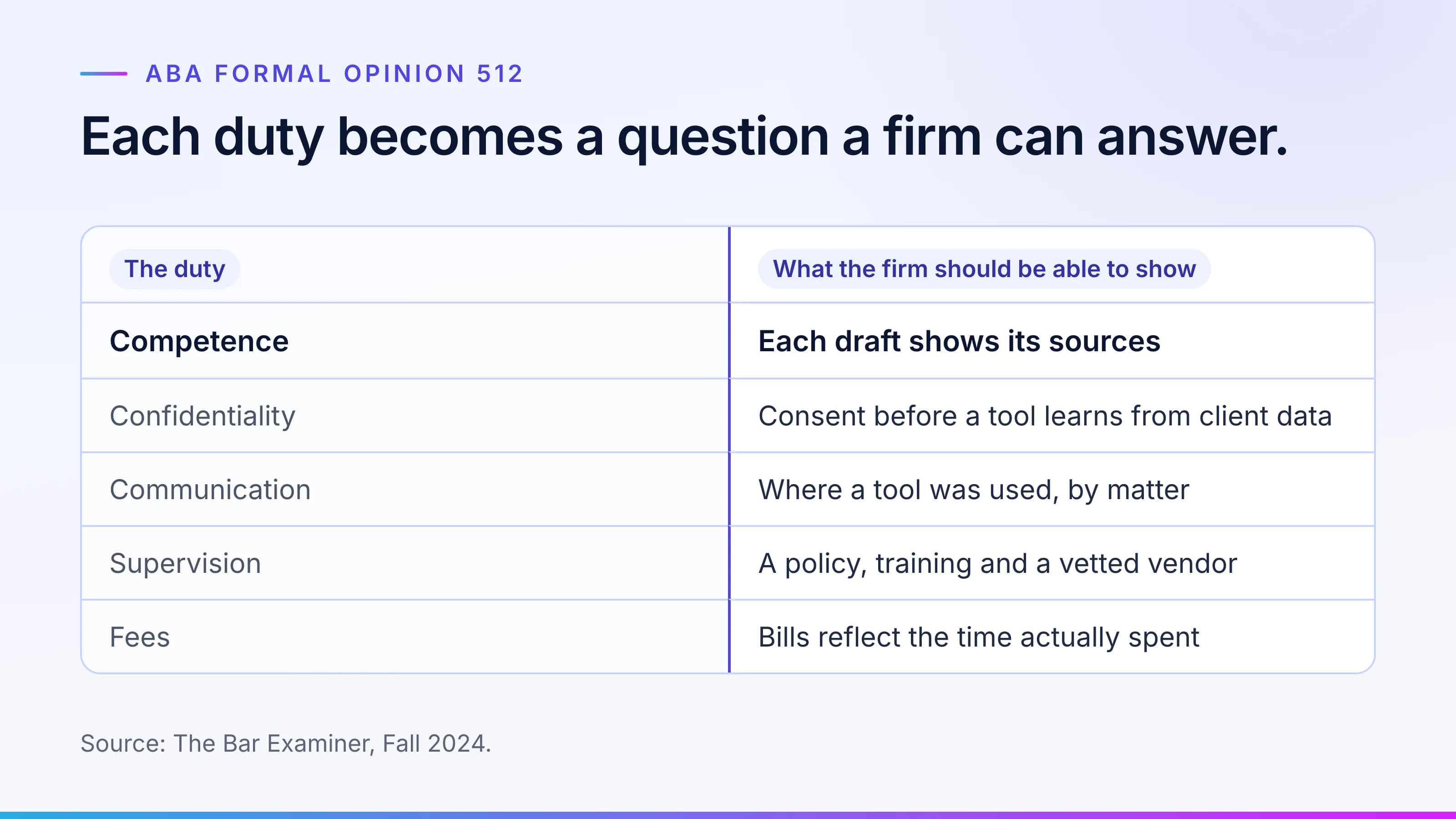
#The opinion does not ask lawyers to become experts in AI. It asks for a reasonable understanding of what a tool can and cannot do. How much independent checking the output needs depends on the tool and the task, so a summary of documents for a filing needs more review than a list of ideas.
- Does each lawyer who uses a tool know what it is good at and where it goes wrong?
- Does every draft show the sources it relied on, so a lawyer can check them?
Confidentiality (Model Rule 1.6)
#Some tools learn from what users type into them, and that can expose one client's information to others. Before putting information relating to a representation into such a tool, a lawyer needs the client's informed consent. The opinion says boilerplate consent does not suffice. The lawyer has to explain the specific risks, including how others might use the information against the client.
- Does the tool learn from client information, and could anything typed into it reach another user?
- Where does the tool run, and who at the vendor can see client data?
- Has each affected client given informed consent where the tool needs it?
Communication (Model Rule 1.4)
#Beyond confidentiality, a lawyer has to consider whether other rules require telling the client about AI use. If a client asks, the lawyer tells them. If using a tool affects the basis or the reasonableness of a fee, the client's informed consent comes first.
- Does the engagement agreement say how the firm uses AI?
- Can the firm tell a client, matter by matter, where a tool was used?
Supervision (Model Rules 5.1 and 5.3)
#Managerial lawyers need clear firm policies on which uses of generative AI are allowed, and supervisors must make reasonable efforts to see those policies followed. Training should cover how to use the tools, the ethics duties and data security. For outside vendors, the opinion points to the same diligence the ABA has advised for outsourcing, such as reference checks, the vendor's credentials and how it checks for conflicts.
- Is there a written policy that names the allowed uses and who approves new ones?
- Has everyone who uses a tool been trained?
- Has the vendor been vetted the way the firm vets any outside provider?
Candor and meritorious claims
#Courts have sanctioned lawyers whose filings cited opinions that don't exist, and some now require lawyers to disclose AI use. The opinion's answer is the review duty that competence carries.
- Is every citation in a draft checked against the source before it is filed?
Fees (Model Rule 1.5)
#An hourly bill must reflect the time actually spent. If a tool makes a task faster, the bill reflects the shorter time. A lawyer also can't charge a client for time the lawyer's own inexperience made necessary. Flat and contingent fees still have to be reasonable under Rule 1.5(a), and the opinion addresses when a tool is overhead and when it is a cost the client may be charged.
- Does time entry capture the time actually spent when a tool helped?
- Is general training on a tool kept off client bills?
How much review a task needs
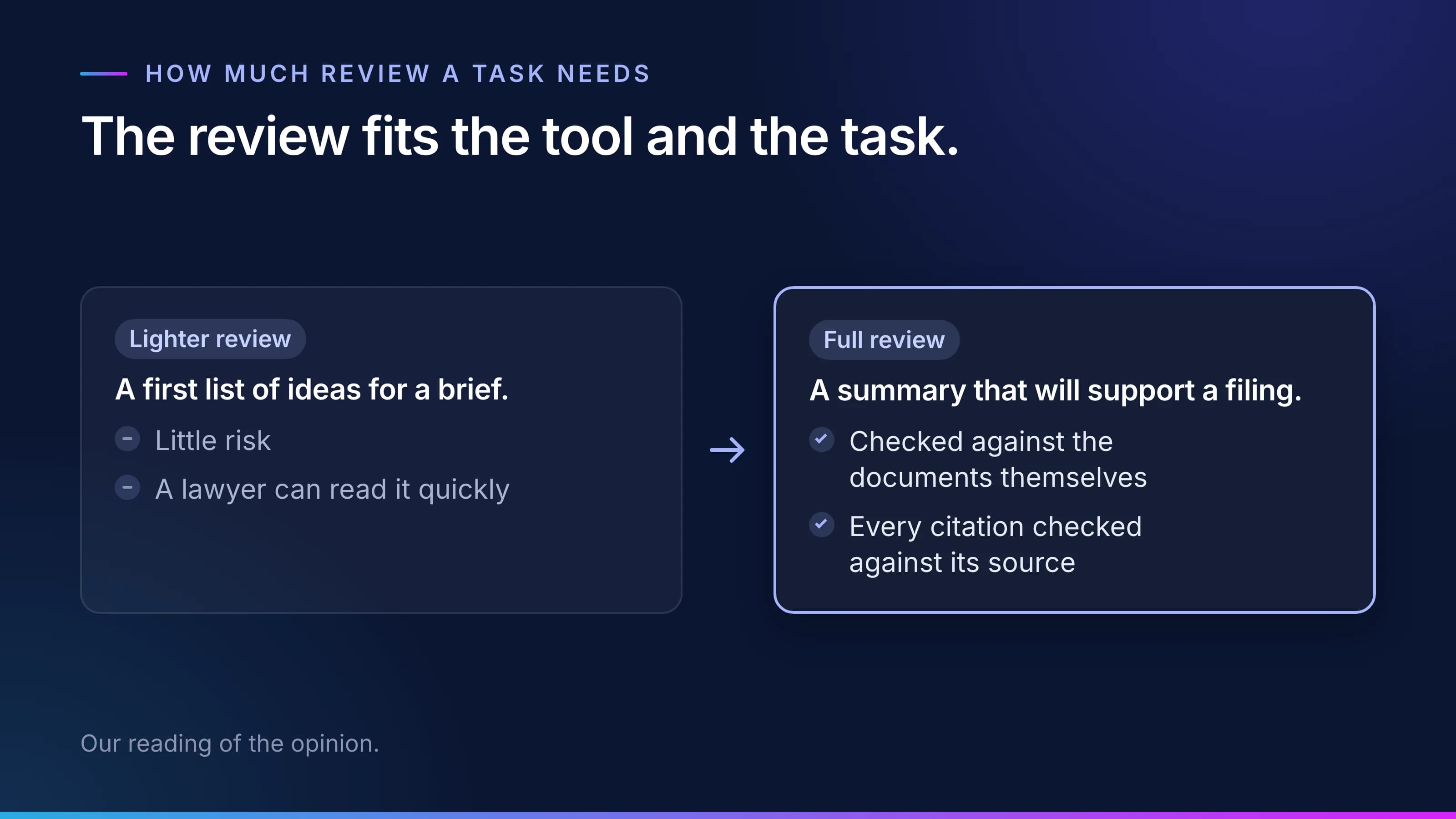
#The opinion's point about review is worth writing into firm policy. A first list of ideas for a brief carries little risk, and a lawyer can read it quickly. A summary of discovery documents that will support a filing needs the lawyer to check it against the documents themselves. Writing this down task by task gives lawyers a standard and the firm a record.
How Inovagio is built for this work
#A Virtual Employee is an AI agent that takes on one kind of work for your team. It has its own account in Auth, and that account starts with no access. It follows the rules your experts approved, shows what each task cost and stops whenever you tell it to.
Take Calloway Finch (Example company), a firm that clears every new matter for conflicts with a Virtual Employee.
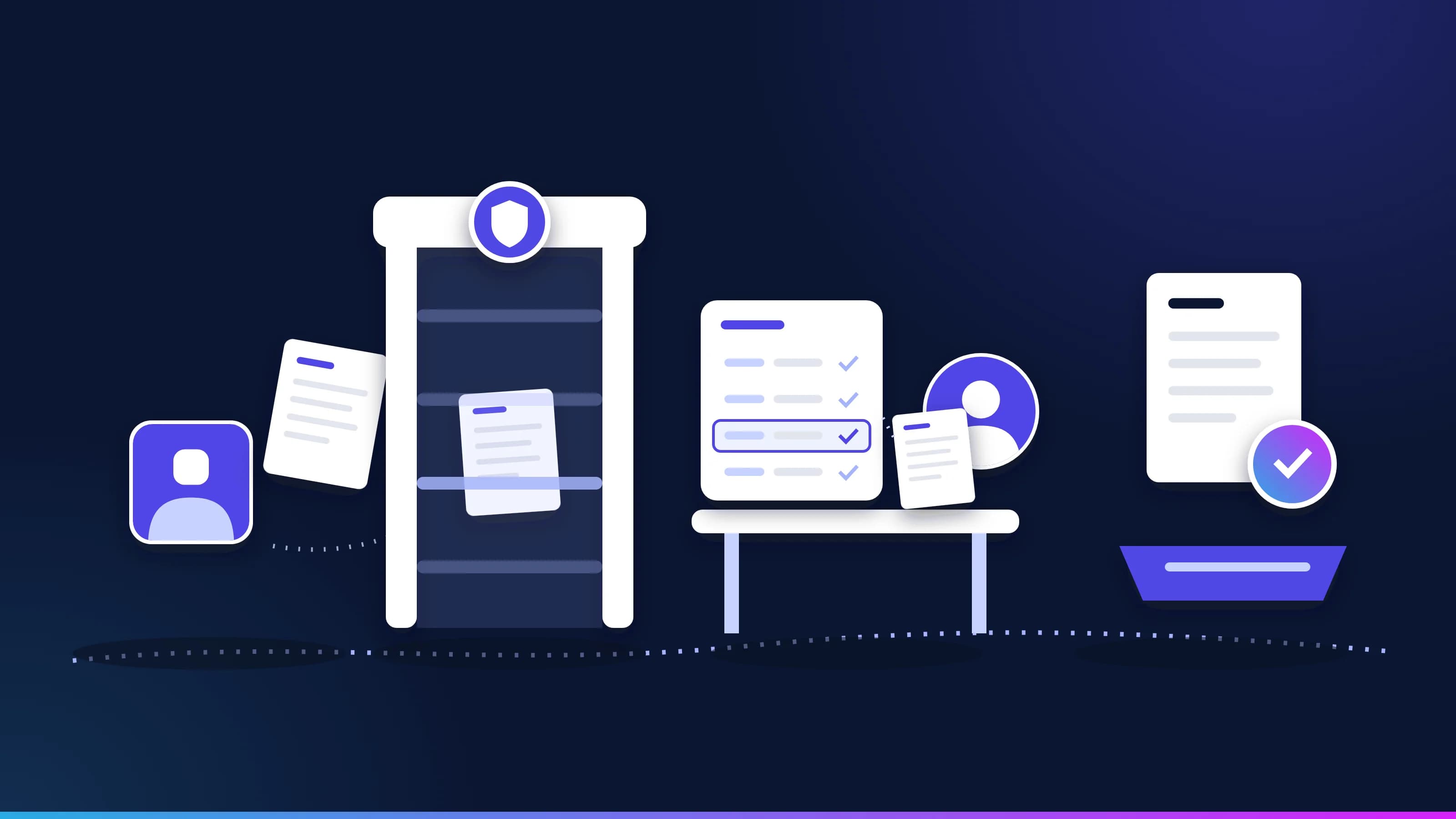
At Calloway Finch, the Virtual Employee checks each party on a new matter and lists each possible conflict it finds, with its source. A lawyer decides every conflict and signs off on every draft. The firm's rules live in Synesis, each one with its source and the partner who approved it. Every step is recorded in Phylax, so the firm can show a client or its own risk team where a tool was used and who checked it. Client data never trains a model another customer uses, and Inovagio runs where the firm decides.
For the conflicts and contract work itself, see Virtual Employees for law firms. To talk through one of your firm's workflows, book a briefing below.
Questions
What people ask.
What is ABA Formal Opinion 512?
ABA Formal Opinion 512 is the American Bar Association's guidance on lawyers' use of generative AI tools, issued on July 29, 2024 by its Standing Committee on Ethics and Professional Responsibility. It explains how the existing Model Rules on competence, confidentiality, communication, candor, supervision and fees apply to those tools.
Does a lawyer need client consent to use generative AI?
Consent isn't always needed. Under ABA Formal Opinion 512, a lawyer needs the client's informed consent before putting information relating to the representation into a tool that learns from it and could disclose it. Boilerplate consent is not enough. Using a tool without client information, such as to generate ideas, needs no consent.
Can a lawyer bill for time saved by AI?
No. Under ABA Formal Opinion 512, an hourly bill reflects the time actually spent, so time a tool saved can't be billed. A lawyer also can't charge a client for time the lawyer's own inexperience made necessary, such as general training on a tool.
The products, industries and examples it covers.
- Knowledge layerSynesisTurns your policies, procedures, records and your people’s know-how into a rulebook your experts approve, which you own and can take anywhere.
- Governance and auditPhylaxSign-in, policy, secrets and one audit trail from the screen to the disk, so you can show any examiner what happened.
- Identity and sign-inAuthOne sign-in for every person, service and AI agent.
- IndustryLegalEach party on a new matter searched with its parent companies and former names, ethical wall requests drafted for lateral hires, and contracts compared with your playbook. Lawyers decide.
Read next.
 Article · GovernanceBusiness rules or AI guardrails? Why regulated work needs bothGuardrails filter what an AI model takes in and says. Business rules check what the work itself must satisfy. In regulated work you need both, plus a model's judgment for the messy parts. What each one catches, a worked example, and what to ask a vendor. · updated November 18, 2026 · 12 min read
 Guide · GovernanceHow an AI business rule is written and approvedEvery Virtual Employee works from rules approved one at a time by the people you make responsible. What a rule contains, who signs it, how a correction becomes a new version, and how any change is rolled back. · updated November 18, 2026 · 9 min read
 Article · ApproachWhy we start by listeningAI assistants read what was written down. Most of how a regulated business really runs never was. So before any work starts, our agents interview your people. · updated November 18, 2026 · 4 min read
See it on your work
See how one of your tasks runs, start to finish.
A 30-minute walkthrough of one of your workflows, the approval step and the audit record, with the people who build the platform.