

Series · Industry rules and AI
AI in a market conduct exam: what insurers get asked
A state insurance department can ask about any AI system that makes or supports decisions affecting consumers, in an investigation or a market conduct exam. This post covers what the NAIC model bulletin says examiners may request, and how to have each answer ready before the letter arrives.
Inovagio team · Published · 5 min read
On this page
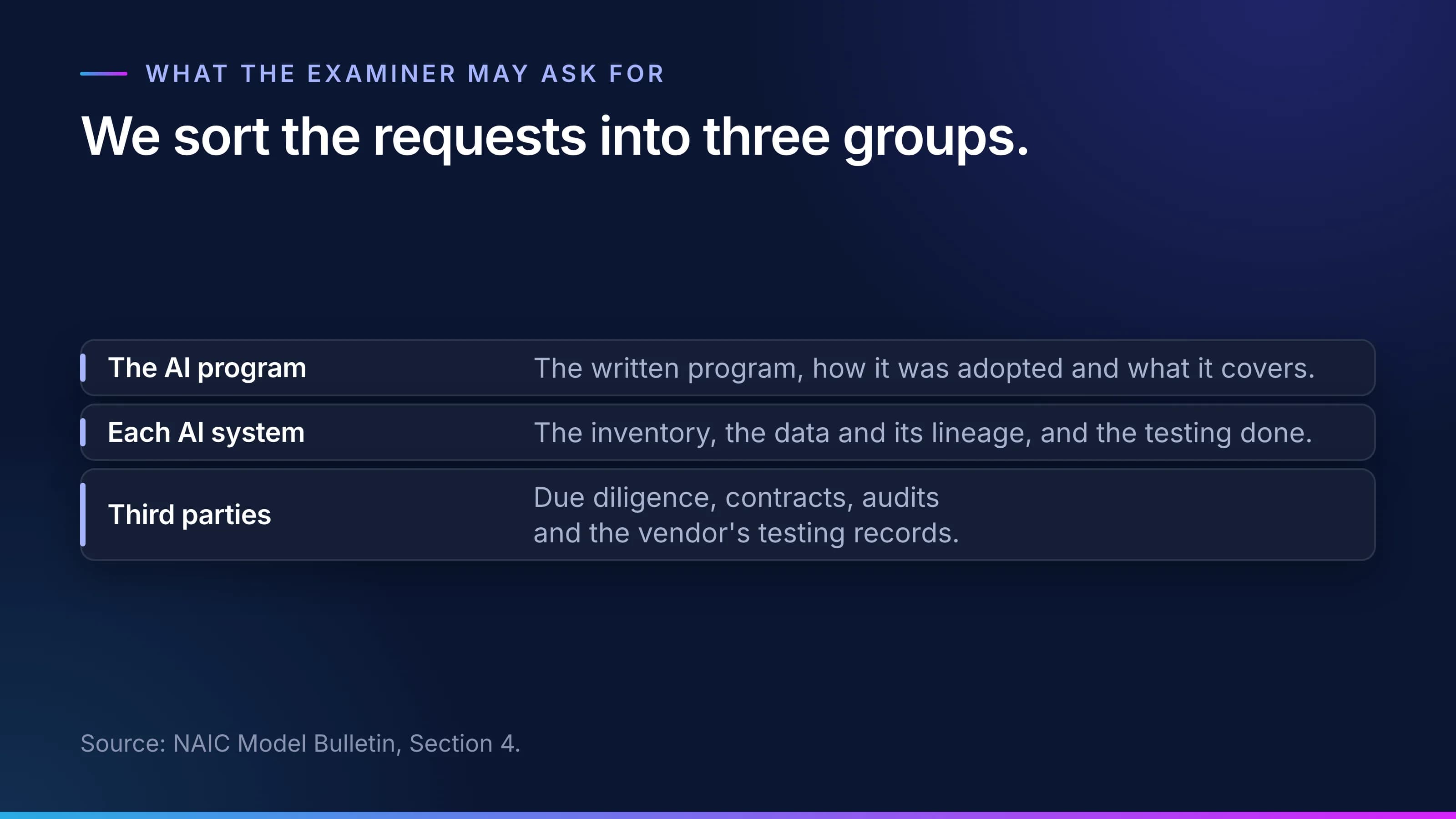
A state examiner may ask about AI in a market conduct exam: any AI system an insurer uses to make or support decisions that affect consumers is open to review. Under the NAIC model bulletin, that can mean the written AI program, the inventory of AI systems, the data and testing behind each one, and the contracts and audits for vendor tools. This piece sets out each request and what to have on file for it. We wrote it for compliance, claims and operations leaders at carriers, MGAs and third-party administrators who use AI, or plan to, in work that touches policyholders.
A market conduct exam already asks hard questions about claim files, complaints and how an insurer treats the people it covers. Once AI touches that work, the examiner's questions follow it.
Note
Not legal advice. Check your state's rules with counsel.
Why AI comes up in a market conduct exam
#The NAIC adopted its model bulletin on the use of AI systems by insurers on December 4, 2023. The bulletin is guidance that each state may adopt, and it starts from laws insurers already follow, including the unfair trade practices and unfair claims settlement practices acts. It says an insurer's actions must not break those laws, whatever method the insurer used to decide on or support them.
Then it says what that means for examiners. An insurer's conduct in the state, including its use of AI systems to make or support decisions that affect consumers, is subject to investigation, including market conduct actions. Section 4 of the bulletin lists the kinds of information and documents a department may request.
What the examiner may ask for
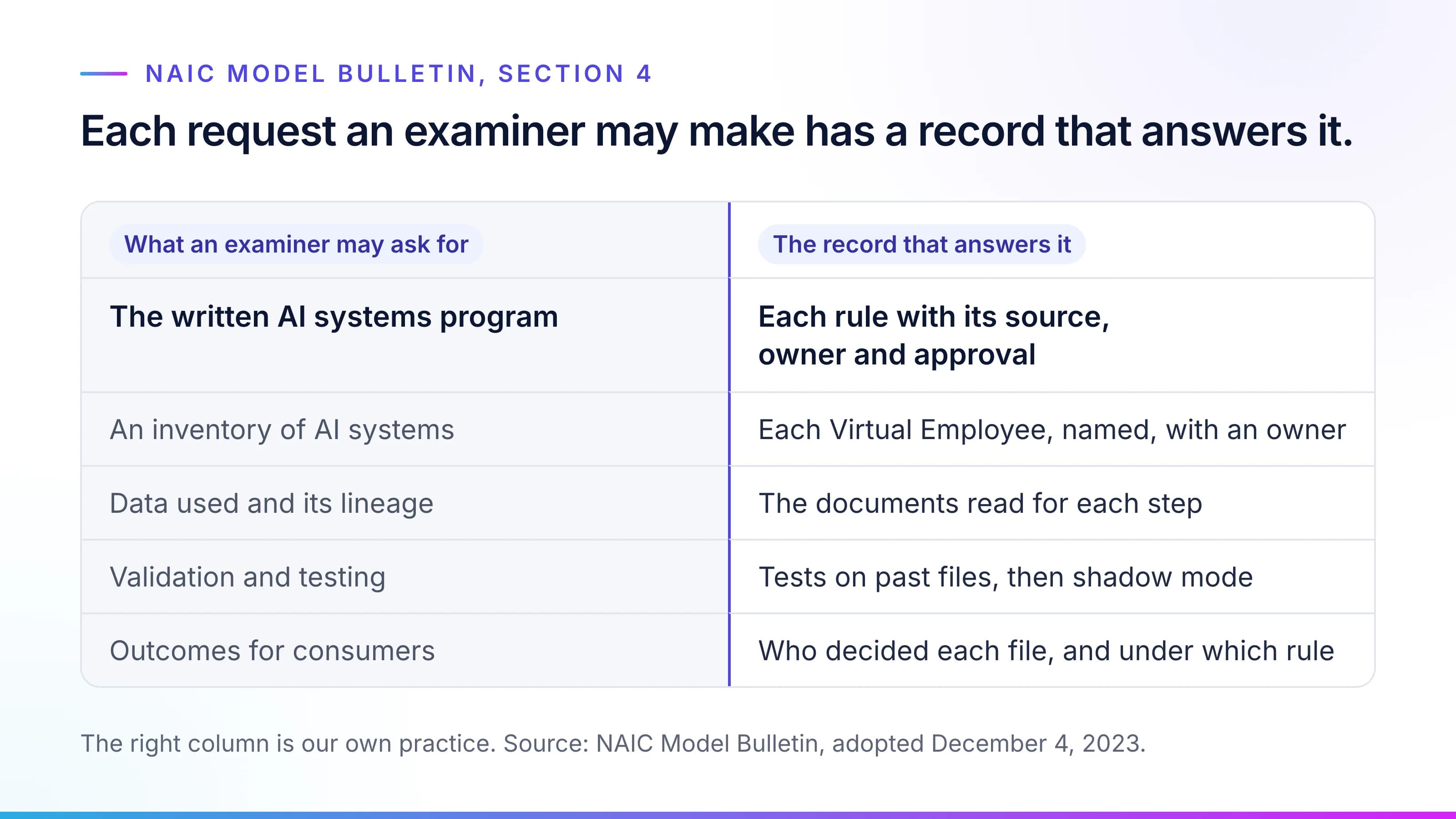
#Section 4 says an insurer can expect questions about how it developed, deployed and uses its AI systems, and about their outcomes, including adverse consumer outcomes. The bulletin defines an adverse consumer outcome as a decision that is subject to insurance regulatory standards and that harms a consumer in a way that breaks those standards. We sort the requests into three groups.
- The program. The written AI systems program, how the insurer adopted it, what it covers and what it leaves out, and the policies, procedures and training behind it.
- The systems themselves. An inventory of the predictive models and AI systems that make or support decisions that can lead to adverse consumer outcomes. For any system under review, the examiner may ask for proof that the program was followed. They may also ask about the data behind it, including its source, lineage, quality and bias analysis, and about how the system was validated, tested and audited, including checks for model drift.
- Third parties. The due diligence done on outside vendors, the contracts with them, the audits of their compliance and their own validation and testing records.
The bulletin also says it does not prescribe specific practices or documentation. An insurer may show compliance in its own way. Even so, the department expects an insurer to produce these records when it asks for them, so build them that way from the start.
Source: NAIC, Model Bulletin: Use of Artificial Intelligence Systems by Insurers, adopted December 4, 2023, Section 1 and Section 4.
What a ready claim file looks like
#Market conduct exams sample files. So the useful test is whether a single AI-assisted file can answer the examiner's questions on its own.
A Virtual Employee is an AI agent that takes on one kind of work for your team. It has its own account, and that account starts with no access. It follows the rules your experts approved, shows what each task cost and stops whenever you tell it to.
Take Fernbrook Casualty (Example company), a carrier that audits its claim files against its state's standards with the help of a Virtual Employee.
When an examiner pulls a Fernbrook file, the record for each step the Virtual Employee took names the approved rule it applied, the version of that rule, the documents it read and the person who approved the rule. Where the Virtual Employee drafted a letter, the record shows which adjuster reviewed and sent it. Adjusters make every claim decision, including every denial. The examiner sees who acted, under which rule and when, without anyone rebuilding the story from memory.
Getting ready before the letter arrives
#Start with the inventory, because every other request depends on it. List each AI system that makes or supports a decision affecting policyholders, including AI inside vendor tools, and give each one an owner.
Next, pick a few real files for each system and walk them through as an examiner would. Check that you can show the rule, the data, the person who decided and the testing behind the system, and note every place where the answer lives in someone's memory. Then close those gaps one at a time.
Finally, ask each AI vendor what it will hand you during an exam. The bulletin names contracts, audits and the vendor's own testing records, so ask for them now.
How Inovagio is built for this work
#Inovagio's Virtual Employees learn the job from your own people and prove themselves on your past cases. Each rule in Synesis names its source and its owner, and it changes only with that owner's approval. Before a Virtual Employee handles real cases, we test it on past files that we set aside before we built it, so it has never seen them. Then it runs in shadow mode beside your team. Every step leaves a record in Phylax that you can open and replay for an examiner. Archon shows which Virtual Employees are running and stops any of them when you tell it to.
Our NAIC AI bulletin checklist turns the whole bulletin into questions to answer before an exam. For the claims work itself, see claim file audits and deadlines. If your team wants to help shape this work, apply to be a design partner.
Questions
What people ask.
Can a market conduct exam cover an insurer's use of AI?
Yes. Under the NAIC model bulletin, adopted December 4, 2023, an insurer's use of AI systems to make or support decisions that affect consumers is subject to investigation, including market conduct actions. The bulletin applies in a state once that state adopts it.
What documents can an examiner ask for about AI?
Section 4 of the NAIC bulletin lists the written AI systems program, the inventory of AI systems, data lineage and bias analysis, validation and testing records including model drift, and, for vendor tools, due diligence, contracts and audits. The list is not exhaustive, and the department may ask for anything else it finds relevant.
Does the NAIC bulletin require specific AI documentation?
No, it doesn't. The bulletin says its goal is not to prescribe specific practices or documentation. It sets out what the department expects and the kinds of records it may request, and an insurer can show compliance in its own way.
The products, industries and examples it covers.
- Governance and auditPhylaxSign-in, policy, secrets and one audit trail from the screen to the disk, so you can show any examiner what happened.
- Knowledge layerSynesisTurns your policies, procedures, records and your people’s know-how into a rulebook your experts approve, which you own and can take anywhere.
- Agent control planeArchonSee every agent at work, and stop or start any of them.
- IndustryInsurance claimsEach claim file audited against your state’s standards, deadlines kept with letters drafted, and bills checked. Adjusters decide.
- IndustryInsurance servicing and reconciliationEach program’s bordereau matched to your policy system, the MGA’s cash matched to what is due, and every line checked against the delegated authority. Your team approves every write-off.
Read next.
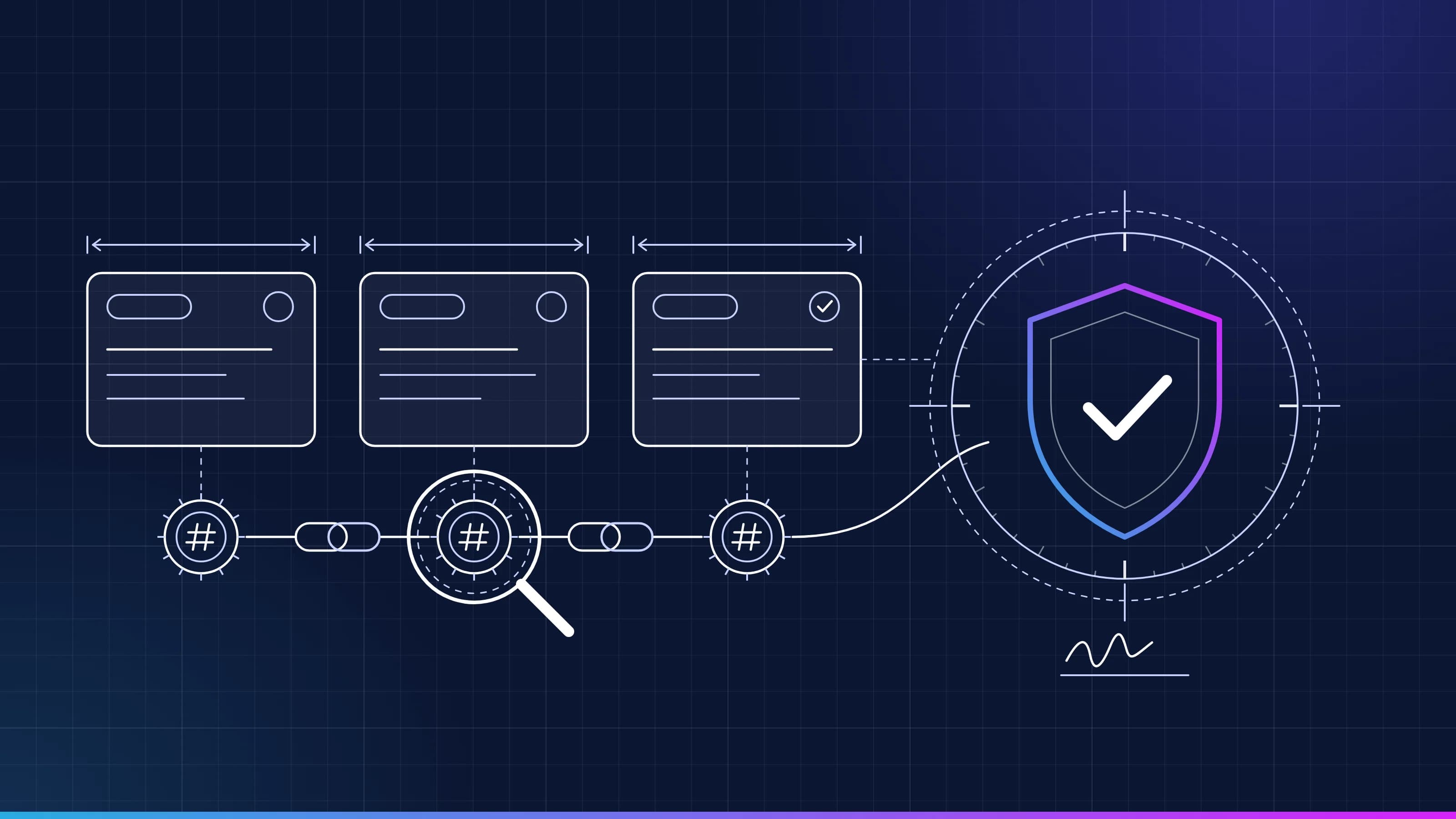 Guide · AI audit trailRead a task recordEvery task Inovagio runs leaves a tamper-evident record. Here is what each line means, how the seals chain together, and how to replay a task end to end. · updated November 18, 2026 · 5 min read
 Article · GovernanceBusiness rules or AI guardrails? Why regulated work needs bothGuardrails filter what an AI model takes in and says. Business rules check what the work itself must satisfy. In regulated work you need both, plus a model's judgment for the messy parts. What each one catches, a worked example, and what to ask a vendor. · updated November 18, 2026 · 12 min read
 Article · GovernanceCan you turn your AI agents off? What examiners now askUS bank regulators have started asking how banks would shut their AI agents down, while the new model risk guidance leaves agents out of scope. Here's what examiners are asking, which deadlines arrive in Colorado and the EU, and what a working kill switch looks like. · updated November 18, 2026 · 11 min read
Design partners
Teach AI one of your workflows, with your own people.
Tell us one workflow you would want AI to learn from your people. We reply to every application.